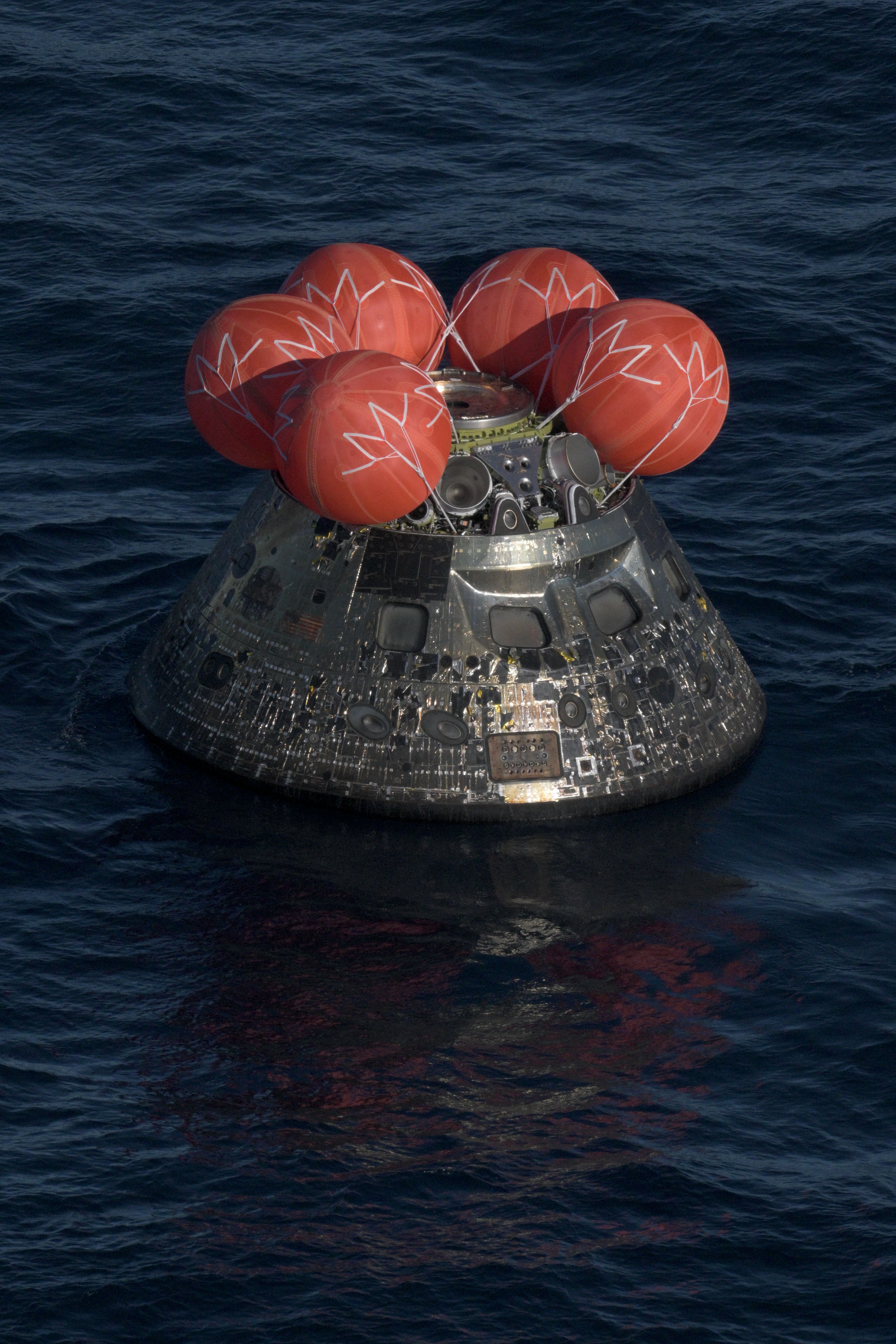
🚀 Artemis II: The Triumphant Return That Marks the Beginning of the Lunar Age
Category : Science - by cronywellBy Redacción Científica
📅 April 13, 2026
⏱️ Reading time: 8 minutes
🏷️ Keywords: Artemis II, NASA, return to the Moon, astronauts, SpaceX, Orion, space science 2026, lunar exploration, Artemis program.
🌍 Executive Summary
After ten days of a journey that kept the world on tenterhooks, the Orion capsule of the Artemis II mission returned to Earth on Friday, April 10, 2026. The successful splashdown in the Pacific Ocean not only marks the end of a technical mission, but the beginning of the permanent human presence in deep space. Unlike the Apollo missions, which were brief forays around, Artemis II has shown that humanity is ready to stay: on the Moon, on space stations in lunar orbit, and eventually on Mars.
This 10-day manned flight around the Moon has been NASA's biggest step since 1972, and its results redefine the boundaries of collaborative space exploration.
🌊 The Return: A Surgical Precision Splashdown
Last Friday, at 2:47 p.m. local Pacific time, the skies lit up with the deployment of the three main parachutes of the Orion spacecraft. On board, the heroes of this feat: Reid Wiseman (commander), Victor Glover (pilot), Christina Koch (mission specialist) and Jeremy Hansen (CSA mission specialist) reported in perfect health after the impact with the water.
The U.S. Navy Recovery Team and NASA extracted the crew in a lightning operation of just 35 minutes, closing a cycle of 10 days, 20 hours and 14 minutes outside our atmosphere.
"Today we are not only returning home; We brought with us the future of exploration. Each of us touched the Moon with our eyes, and soon we will touch it with our hands."
— Victor Glover, moments after exiting the capsule.
🛰️ Records that defy history
Artemis II has pulverized landmarks that have remained intact since December 1972 (Apollo 17):
|
Milestone |
Artemis II Achievement |
|
Maximum distance from Earth |
432,000 km (absolute record for a manned spacecraft) |
|
Historical inclusion |
First woman (Christina Koch) and first Canadian person (Jeremy Hansen) to orbit the Moon |
|
Re-entry rate |
40,000 km/h – heat shield resisted 2,800 °C |
|
Deep Space Durability |
More than 240 hours out of the protection of the Earth's magnetic field |
|
Laser Communications |
4K video streaming from beyond the Moon for the first time |
In addition, the crew broke the record for experiments in continuous microgravity conducted outside a space station: 27 different studies, from plant growth to autonomous navigation.
🧬 Cutting-Edge Science: "Organs on Chips" and Beyond
Beyond engineering, the scientific value of this mission lies in the biology of deep space. For the first time, microfluidics devices (organs-on-chips) were used to study in real time how cosmic radiation and microgravity affect:
This data is vital for the future Artemis III mission (lunar descent scheduled for 2027) and the eventual trip to Mars, which would last more than 2 years.
Other notable experiments:
👨 🚀 Crew profile: the first humans in deep space of the 21st century
The team's chemistry was key: they performed more than 30 emergency simulations before the flight, including fire on board and loss of communications.
🌕 Artemis II vs Apollo 8 Comparison (Historical Lunar Orbital Missions)
|
Feature |
Apollo 8 (1968) |
Artemis II (2026) |
|
Duration |
6 days, 3 hours |
10 days, 20 hours |
|
Maximum altitude |
377,000 km |
432,000 km |
|
Heat Shield Technology |
Analog avionics |
Advanced ablative materials + 3D printed titanium |
|
Communications |
Analog radio |
Laser + Deep Space Network 2.0 |
|
Scientific load |
4 experiments |
27 experiments + 12 commercial payloads |
🖼️ Visual Gallery (official reference links)
Note: To respect rights, original sources are indicated where you can find high-resolution images:
📅 What's next? Artemis III and the future of human presence on the Moon
With Artemis II validated, Artemis III (scheduled for 2027) will attempt the first manned moon landing since 1972. What's new:
"Artemis II has been the dress rehearsal. Now we're going to live there."
— NASA Administrator Bill Nelson at a post-splashdown press conference.
📌 Conclusion: The Beginning of an Era
Artemis II isn't just a successful mission. It's the litmus test that we can operate safely in deep space with 21st-century technology. We have regained the ability to leave low-Earth orbit, and this time we will not go back.
The new lunar era has begun. And it's not just America's: it's all of humanity.
Document generated in 0.01 second