


Opposition vows to build a democratic and pluralistic Syria after the fall of al-Assad's government
DAMASCUS, Syria (AP) — The Syrian National Coalition, one of Syria's main oppositions, vowed Sunday to continue working to transfer authority to a transitional governing body with full executive powers, to usher in a free, democratic and pluralistic Syria.
In a statement to the international community, the coalition emphasized its commitment to ensuring stability and security in neighboring countries and stressed that Syrians will refrain from interfering in the affairs of regional states.
The coalition said it hoped to forge strategic alliances with countries in the region and around the world to rebuild Syria for all its citizens, regardless of ethnicity, religion or sect. The group reiterated its vision of a nation founded on equality and democratic principles, laying the foundation for a peaceful and inclusive future.
In recent days, Damascus has become a focal point of rapid developments, marking a critical turning point in Syria's protracted civil conflict. The Syrian capital, which for years remained under the tight control of President Bashar al-Assad's government, experienced a sudden and dramatic change in power on Sunday following major rebel advances in the country.
Beginning in late November, armed opposition groups made significant gains in northern provinces such as Aleppo, where the Hayat Tahrir al-Sham rebel group spearheaded a major offensive against government forces. With the rebels' advance, reports emerged of rapid army withdrawals from major southern provinces, including Quneitra, Daraa, and Sweida.
Inside the capital, these developments sparked public anxiety, and many residents were unsure of what would come next. They rushed to get basic necessities, such as bread and rice.
After opposition forces seized control of Damascus, the Russian Foreign Ministry confirmed in a statement on Sunday that al-Assad has left Syria and resigned as the country's president, who, in the meantime, called for a peaceful transfer of power.
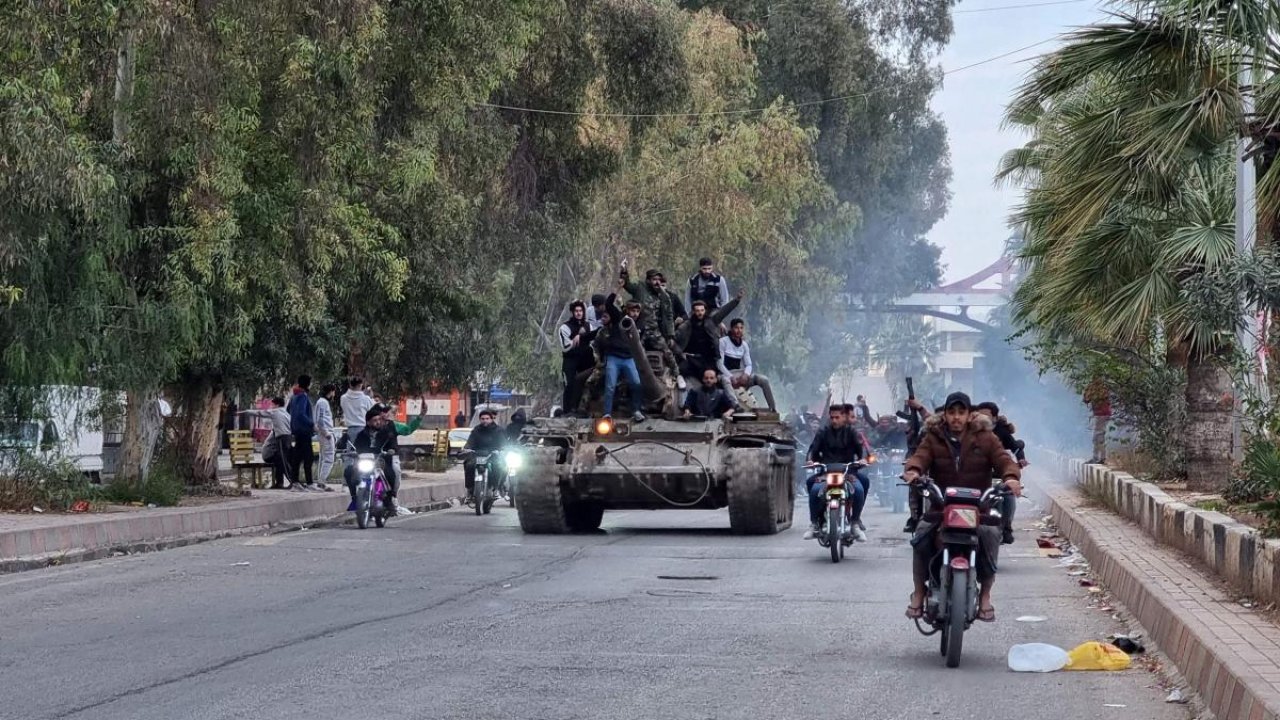
Local factions and international observers are closely monitoring the situation in Syria, concerned about the stability of diplomatic missions and the potential for violence in the Syrian capital following incidents such as the assault on the Iranian embassy.
Iranian Foreign Ministry spokesman Esmaeil Baghaei on Sunday condemned the attack, while noting that Iran's ambassador to Syria and embassy staff were in full health.
Mercosur and the EU announce the completion of trade agreement negotiations in Uruguay
MONTEVIDEO -- Uruguayan President Luis Lacalle Pou and European Commission President Ursula von der Leyen confirmed Friday the completion of negotiations for a trade agreement between the Southern Common Market (Mercosur) and the European Union (EU).
During the 65th Summit of Mercosur (Argentina, Brazil, Paraguay and Uruguay) and Associated States, which is being held this Friday in Montevideo, Lacalle Pou said that an agreement of this nature "is not a solution, it is an opportunity."
Exercising the temporary presidency of Mercosur, the Uruguayan president pointed out that the speed of progress will depend on the will of each country, emphasizing that progress must be made with "small, but sure" steps in the same direction.
Lacalle Pou spoke on behalf of the other founding members of the South American bloc: Javier Milei (Argentina), Luiz Inácio Lula da Silva (Brazil) and Santiago Peña (Paraguay).
For her part, Von der Leyen expressed the "success" of the negotiations, calling them an "ambitious" agreement that sends a "clear and forceful message to the world" by demonstrating that democracies can support each other.
"Today is truly a historic milestone, and let me thank the chief negotiators for their dedication and determination," von der Leyen said.
"This agreement is not just an economic opportunity; It is a political necessity. We are partners with shared mentalities and common roots," he added, speaking at Mercosur headquarters.
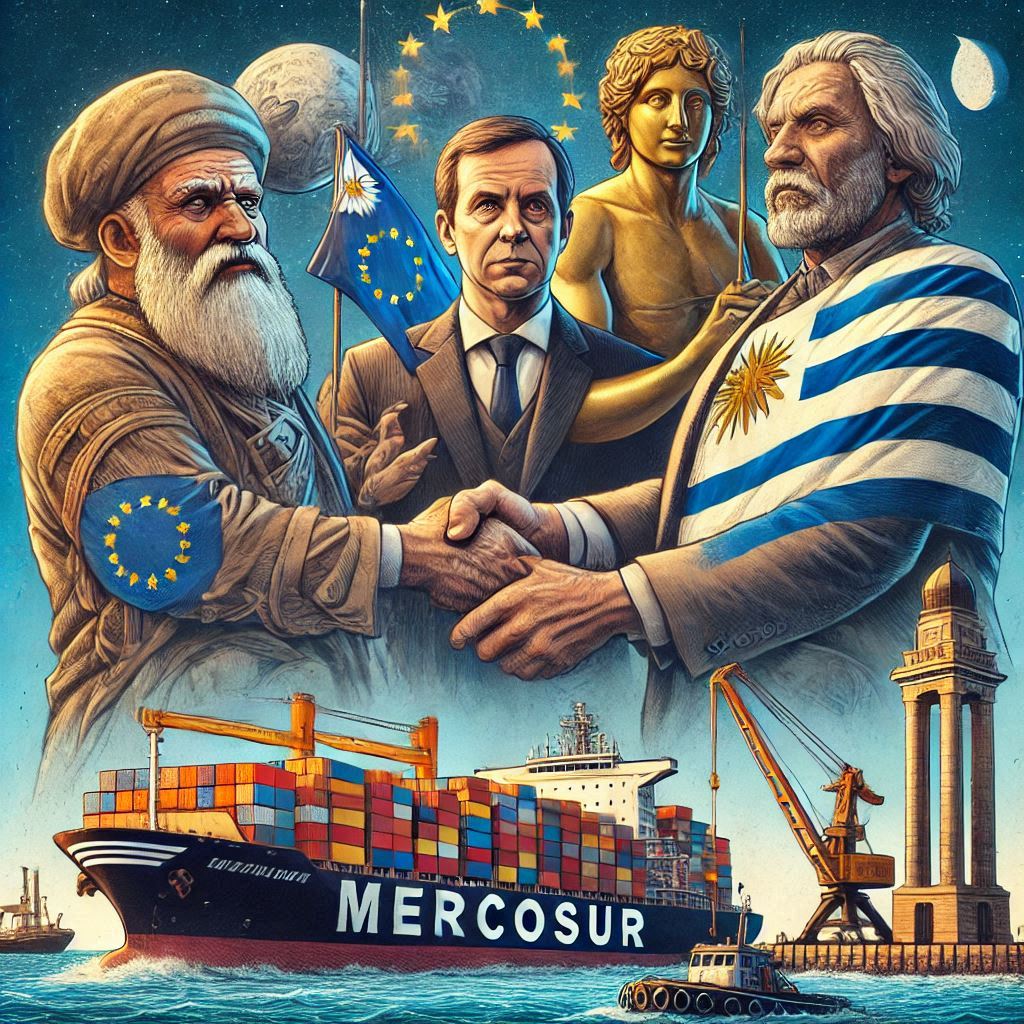
Mercosur and the European Union had initially reached an agreement in 2019, but it was never ratified and had to be renegotiated.
The agreement still needs to be ratified by the parties involved, including the parliaments of the four founding countries of Mercosur. However, it faces resistance from some European nations, led by France, who fear that the influx of agricultural products from South American countries could negatively affect their own agricultural sectors.
The agreement would create a market of more than 700 million people, making it the largest free trade area in the world.
Mercosur hopes to export more food products such as beef and soybeans, while the European Union aims to increase shipments of cars and machinery.
Uruguayan Foreign Minister Omar Paganini explained that the agreement allows Mercosur countries to eliminate 70 percent of tariffs on exportable products such as industrial oils, fish, fruits, vegetables and infusions.
For Paganini, the trade pact also opens up opportunities for European investments in Mercosur as part of value chains.
Due to challenges in gaining parliamentary approval in the European Union, the agreement has been split into two parts: a three-pillar Association Agreement and an Interim Trade Agreement as the trade pillar.
The trade agreement will be adopted more quickly than the Association Agreement, as it is the exclusive competence of the European Union and only requires its adoption by the EU institutions and its Parliament.
The Association Agreement, on the other hand, is a mixed competition agreement and must be approved not only by the EU institutions, but also by the national and regional parliaments of each Member State.
Mysterious finding: scientists discovered life forms in ancient rocks more than 3000 years old
These organisms, of surprising sizes, could offer new clues about the evolution of life on Earth.
:format(jpg)/f.elconfidencial.com%2Foriginal%2F384%2Fbb8%2F481%2F384bb848164a39bd4d51cc6d4a9fe397.jpg)
Scientists have made a surprising discovery by finding fossilized cells in rocks that formed shortly after Earth's birth, about 3.8 billion years ago.
These cells, remarkably different from any other living thing on the planet, have no cell walls and present a complexity that exceeds that of modern cells.
Now, a new study offers a new explanation for the origin of these mysterious structures and suggests that they could be the precursors of modern cells.

What are the cells found in ancient rocks like?
Unlike modern bacteria, which are typically 1 to 2 micrometers wide and lack internal structures, the microfossils found in these ancient rocks are a considerable 60 to 70 micrometers in size.
This unprecedented discovery has been a subject of intense debate among biologists, who question whether these fossils really represent the remains of living cells.
An eye-opening study on bacteria
Microfossils were first discovered in 1987 and have since been found in different parts of the planet. "They seem too complex," said Dheeraj Kanaparthi, a researcher at the Max Planck Institute for Biochemistry in Germany, in statements collected by New Scientist.
"They're also too big. What we find is always disconcerting," he added.
The recent study by Kanaparthi's team, still pending publication, focuses on bacteria growing around freshwater springs at the bottom of the Dead Sea.

These organisms are a type of cell without a wall called L-forms, known since the 1930s. It was found that under high salinity conditions, these cells tend to swell and develop structures similar to mysterious microfossils.
How was the evolution of these cells?
The researchers suggest that the saline conditions and the type of salts present in the environment of these primitive fossils could be responsible for the excessive growth of the cells, forming what appear to be internal structures, indicates the article written by Omar Kardoudi.

In different situations, these L-forms grow in long chains that divide into separate cells. "We thought that these cells would grow into big bubbles and then split into a thousand pieces," Kanaparthi explains, adding, "But in reality, they reproduce in a very defined way."
This study provides evidence on:
The country showed its interest in acquiring Scorpene submersibles by signing a letter of intent.
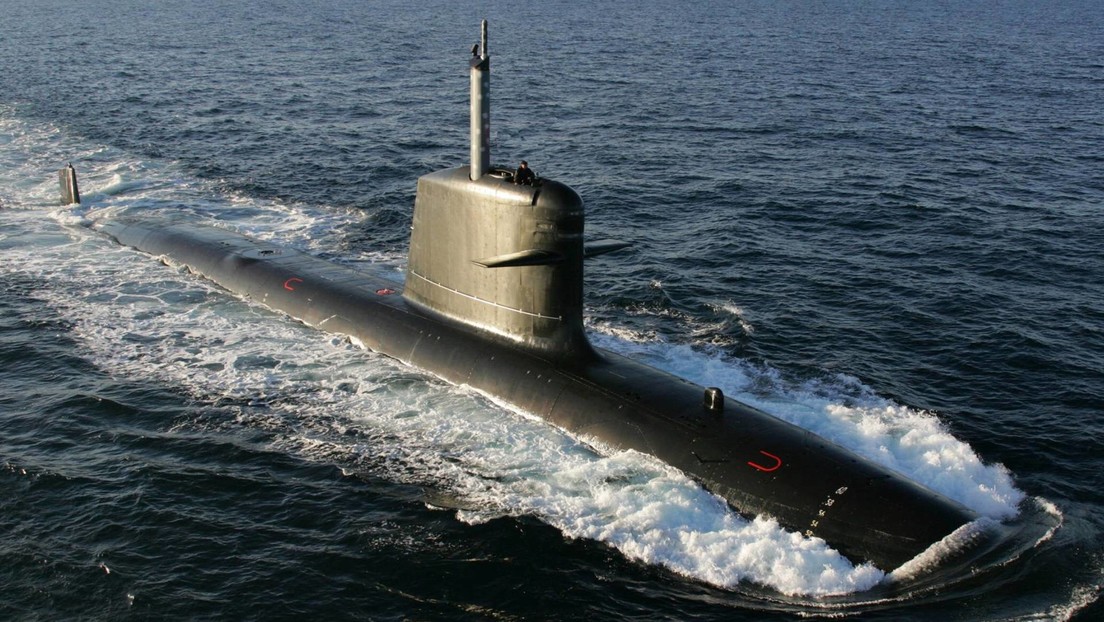
Scorpene submarine made in France.
The government of Argentine President Javier Milei took another step towards its goal of acquiring new submarines for the country's Navy with the aim of recovering an operational capacity of this force after the loss of the submarine ARA San Juan, which sank in 2017, Todo Noticias reported on Sunday.
According to the media, a few weeks ago, Argentina's Ministry of Defense managed to sign a letter of intent with its French counterparts to acquire Scorpene-class units, which means that the Latin American country showed interest in moving forward with an eventual agreement. However, the signing of a letter of intent does not yet mean that the agreement has finally been finalized.
Previously, it was already revealed that in the 2025 Budget the Milei government made a request for debt for some 2,300 million dollars "for the recovery of submarine capacity." The minimum repayment term is three years and the Ministry of Defense would take the loan.
The Argentine government is considering buying two French Scorpene submarines, developed by the company Naval Group, at a unit cost of 500 million dollars. Its construction may take up to seven years and it is not even ruled out that the Argentine shipyard Tandanor will participate in the process.
These submarines, which are 72 meters long, have a diving depth of 300 meters, an autonomy of 78 days to carry out missions in the open sea and a payload of 18 torpedoes and missiles.
Document generated in 0 second