









Blog - Science
 Nature reveals the most important scientific discoveries of 2025 - by
Nature reveals the most important scientific discoveries of 2025
From the discovery of a new layer of the immune system to ecosystems in the most extreme ocean depths
The prestigious scientific journal Nature has just published its annual list of the 10 people and discoveries that marked the year 2025, consolidating an extraordinary period for global research. Among the standout findings are revolutionary advances in immunology, ocean exploration, biotechnology, and personalized medicine that promise to transform our understanding of the natural world and the therapeutic capabilities of modern science.
A hidden arsenal in our cells
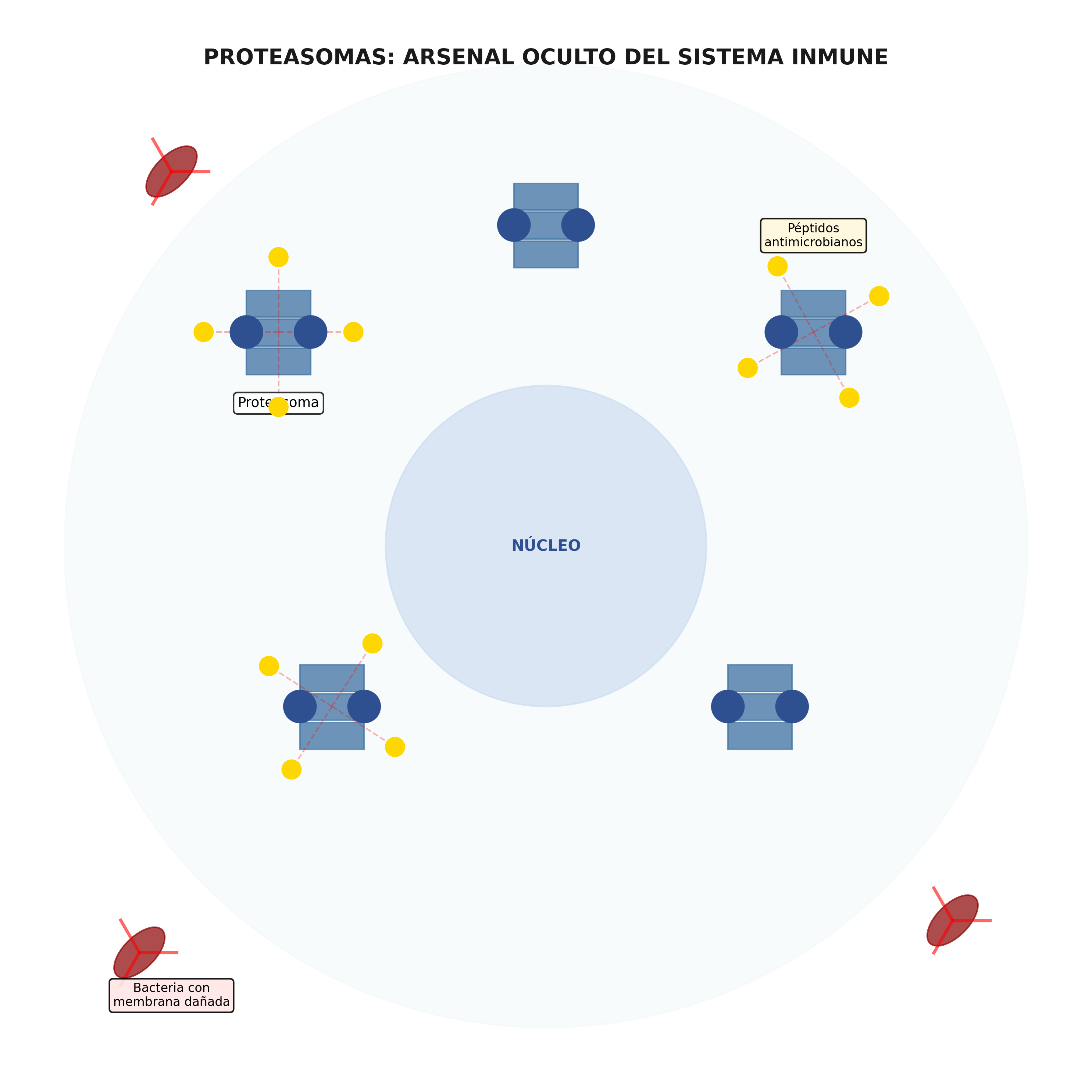
The most shocking discovery of the year came from systems biologist Yifat Merbl and her team at the Weizmann Institute of Science in Israel. While researching proteasomes, cellular structures known primarily for their protein recycling function, Merbl identified a completely unknown ability of our immune system.
Proteasomes, which make up to two percent of a cell's protein content and degrade seventy percent of cellular proteins, turned out to have a secret mode of operation. When they detect a bacterial infection, these tiny structures change their molecular configuration and begin to produce antimicrobial peptides capable of destroying bacteria by piercing their outer membranes.
"This is really exciting because we didn't know this was happening in cells," Professor Merbl told the BBC. "We discovered a new immunity mechanism that allows us to have a defense against bacterial infections. It's happening all over our body in every cell and generates a new class of potential natural antibiotics."
The finding, published in the journal Nature in March 2025, revealed around a thousand peptide fragments with antimicrobial sequences, all of which resulted from the degradation of ordinary and unspecialized proteins. Most surprisingly, these peptides come from cellular waste machinery, which led the team to christen their research method "container diving" or "dumpster diving" in scientific terms.
Implications for the Antibiotic Crisis
This discovery comes at a critical time. Bacterial resistance to antibiotics represents one of the greatest threats to global public health. Experiments by Merbl's team showed that when proteasomes are turned off in laboratory cells, they become significantly more vulnerable to infection by bacteria such as Salmonella.
Professor Daniel Davis, director of biological sciences and immunologist at Imperial College London, called the findings extremely striking, noting that they fundamentally change our understanding of how the body fights infections. However, he cautioned that turning this discovery into a new source of clinical antibiotics still requires years of additional research.
Dr Lindsey Edwards, an expert in microbiology at King's College London, stressed that this mechanism could be especially useful in immunocompromised patients, who are more vulnerable to severe infections and have limited therapeutic options.
Life in the Abyss: The Deepest Ecosystem on the Planet
While Merbl explored the microscopic depths of our cells, Chinese geochemist Mengran Du descended into the most extreme depths of the Pacific Ocean. With just 30 minutes left on his underwater mission aboard the submersible Fendouzhe, Du decided to explore a final stretch of the Kuril-Kamchatka Trench between Russia and Alaska.
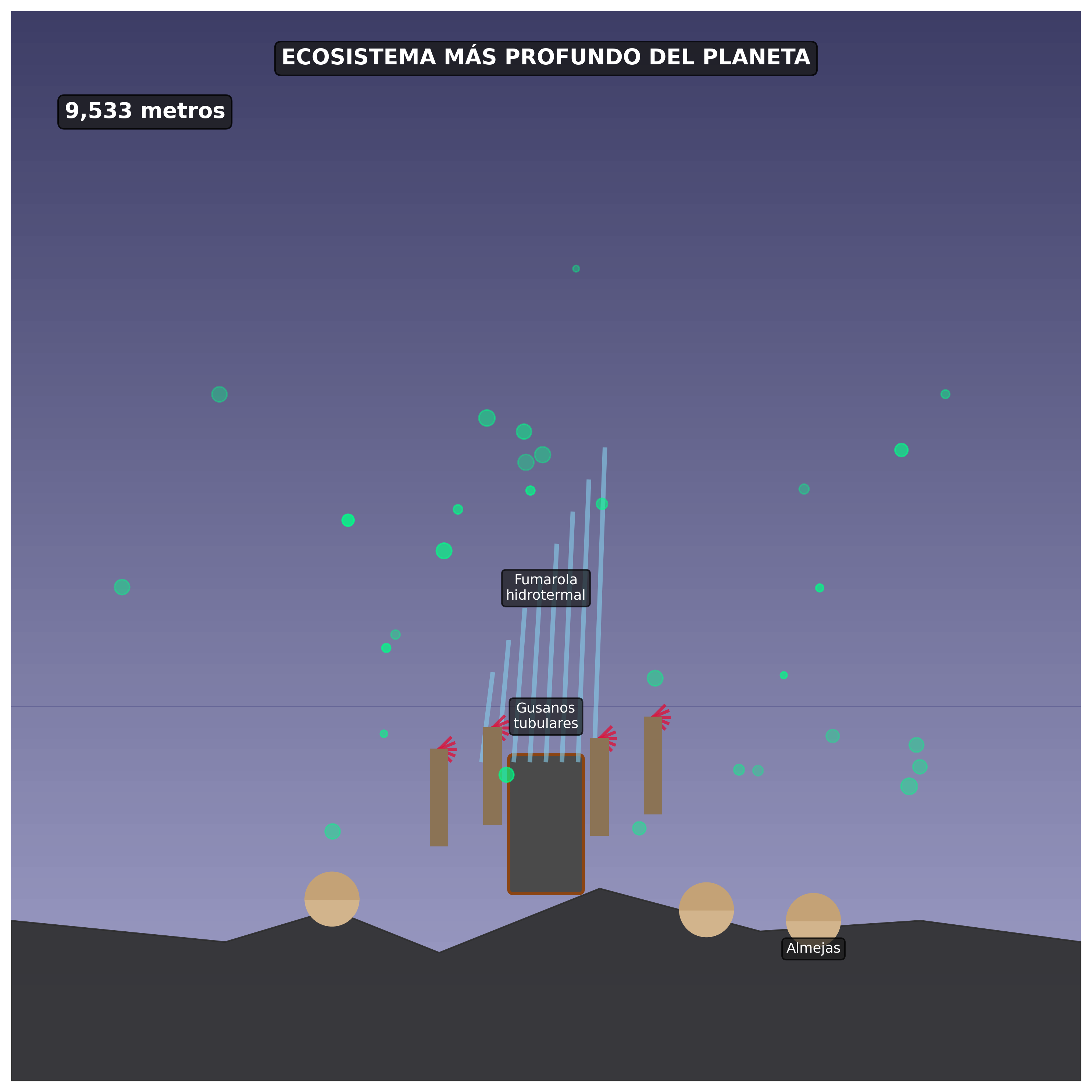
What he found redefined the known limits of life on Earth. At depths of up to 9,533 meters below the surface, nearly 25 percent deeper than any previous record, Du and his team at the China Institute of Deep-Sea Science and Technology documented entire communities of tube worms, clams, and mollusks thriving in conditions that seemed impossible for complex life.
Chemical oases in absolute darkness
These creatures don't rely on photosynthesis, but on chemosynthesis, a process by which symbiotic bacteria living inside them convert chemical compounds such as methane and hydrogen sulfide into usable energy. The discovery, published in Nature in July 2025, revealed a roughly 2,500-kilometer corridor of chemosynthetic ecosystems in the hadal zone of the northwest Pacific.
"Although we see the hadal trench as a very extreme environment, the most inhospitable environment, these organisms can happily live there," explained Du, who was recognized as one of the key figures in science of 2025 by Nature.
The sediment analysis revealed surprisingly high concentrations of methane, an unexpected finding that led the team to formulate a new hypothesis: microbes in these ecosystems convert organic matter in sediments into carbon dioxide and then methane, a process scientists didn't know occurred at such depths.
Implications for the global carbon cycle
This discovery has ramifications that go far beyond marine biology. The hadal trenches, as it is now understood, act not only as methane reservoirs but as active carbon recycling centers. Recent studies suggest that sediments in these areas can sequester up to 70 times more carbon than other regions of the seafloor.
Julie Huber, a deep-sea microbiologist at the Woods Hole Oceanographic Institution who was not involved in the research, expressed amazement at the extent and diversity of the communities discovered. The finding suggests that similar ecosystems could exist in other hadal trenches around the world, dramatically expanding our understanding of where and how life can thrive in extreme conditions.
Other outstanding scientific milestones
The Nature 2025 list also recognized other significant advances that are shaping the future of science and medicine.
Personalized medicine with CRISPR
The case of KJ Muldoon, a child born in 2024 with CPS1 deficiency, an ultra-rare genetic disease that prevents protein processing and accumulates ammonia in a lethal way, marked an unprecedented milestone. A team of doctors and scientists from Philadelphia and Pennsylvania developed a completely customized CRISPR gene-editing therapy in just six months, designed to correct a single error in your DNA.
This treatment represents the first case of fully personalized gene therapy for an individual mutation, opening the door to a new era of precision medicine where treatments can be designed specifically for each patient's unique genetic profile.

Fighting dengue with bacteria
Brazilian Luciano Moreira developed an innovative method to combat dengue by releasing Aedes aegypti mosquitoes infected with the Wolbachia bacterium, which blocks the transmission of dengue, Zika and chikungunya viruses. This method, initially experimental, has been adopted as a national measure in Brazil, marking one of the most ambitious efforts to control vector-borne diseases.
The Vera C. Rubin Observatory
Nature also recognized the first images captured by the Vera C. Rubin Observatory in Chile, one of the largest and most advanced telescopes in the world. This instrument promises to revolutionize our understanding of the universe by mapping the entire visible sky of the Southern Hemisphere every few nights, making it possible to detect transient astronomical objects and study dark matter in unprecedented detail.
A year of scientific transformation
The discoveries of 2025 share a common thread: science's ability to reveal the unseen, whether it's digging through cellular junk to find new immune defenses or descending into the most inhospitable ocean depths to discover thriving ecosystems.
These findings not only push the frontiers of human knowledge, but also offer tangible hope in the face of some of the most pressing challenges of our time: bacterial resistance, climate change, and rare genetic diseases.
As the year draws to a close, the scientific community looks optimistically to 2026, aware that each discovery opens up new questions and possibilities. As Professor Merbl pointed out about their immunological finding, the team believes that it has only scratched the surface of this molecular universe. The same could be said of Du's hadal ecosystems and the countless mysteries that still await deep within our planet and our own cells.
###
Sources: Nature, BBC, CNN, El Universal, Weizmann Institute of Sciences, Chinese Academy of Sciences
Nobody gave a comment yet.
Be the first to do so!