|
MIDIRE.AR · SCIENCE AND HEALTH
★
MERCK–CONICET AWARD 2026
Fernández Corazza and Quintá, the award-winning scientists
A "brain GPS" for epilepsy and a molecule to repair the spinal cord
What they developed, how they were chosen from among 84 projects and what the award means for Argentine science.
Blog article · Editorial midire.ar · 14 min read
|
⏱ Reading time: 14 min · 2,710 words approx.
✎ Editorial midire.ar · Published on October 29, 2026 · Science and health
CONICET and Merck Argentina presented the sixth edition of the Merck-CONICET Award for Innovation in Health Sciences. First place went to Mariano Fernández Corazza (LEICI, CONICET-UNLP) for NViES, a software that plans intracranial electrical stimulation in epilepsies that do not respond to drugs. The second place went to Héctor Ramiro Quintá (Hospital Alemán) for HBP-MF-HQ, a synthetic molecule designed to promote spinal cord repair. 84 projects were presented and ten reached the final.
Two Argentine projects, the same challenge: to bring knowledge from the laboratory to the patient's bedside. The first proposes a "GPS" for medical teams to explore the brain with greater precision before operating on medication-resistant epilepsy. The second seeks the first drug of its kind to recover nerve connections after a severe traumatic spinal cord injury. Both were distinguished by a jury made up of scientists and medical specialists, in a contest that is already a fixed appointment of the articulation between public science and private companies.
In this article
• The news: who won and how much they will receive
• What is the Merck–CONICET Award?
• First place: NViES, a "brain GPS" for epilepsy
• Second: a molecule to repair the spinal cord
• The ten finalists
• Why it matters and what's coming next
• Frequently Asked Questions and Glossary
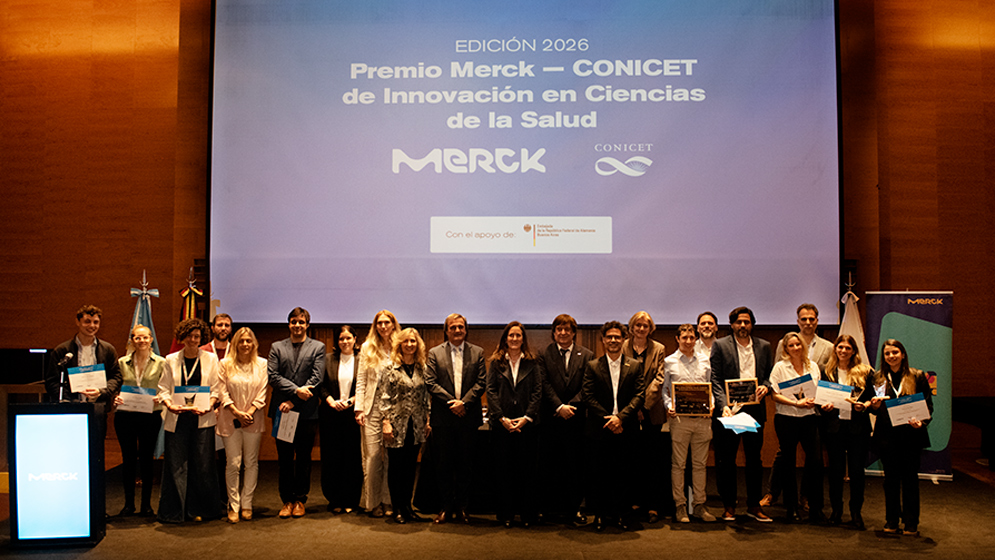
Awards ceremony at the C3
Award ceremony of the Merck-CONICET Award for Innovation in Health Sciences 2026, at the Cultural Center of Science (Buenos Aires).
View image: https://www.conicet.gov.ar/wp-content/uploads/010-web-18.jpg
Image Source: https://www.conicet.gov.ar/se-entregaron-los-galardones-del-premio-merck-conicet-de-innovacion-en-ciencias-de-la-salud-2026/
Credit: CONICET · Creative Commons Attribution 2.5 Argentina License (CC BY 2.5 AR). Cite the source when reusing.
★ The news: who won and how much they will receive
The ceremony was held in the Auditorium of the Cultural Center of Science (C3), in the city of Buenos Aires, and the institutional note of CONICET was released on October 22, 2026. The event was led by the president of CONICET, Daniel Salamone; the general director of the Merck Group in Argentina, Marcelo Ponte; the ambassador of Germany, Catalina Cullas, and the secretary of Innovation, Science and Technology, Adriana Baravalle.
|
Location
|
Project and manager
|
Award
|
|
1.
|
NViES – NeuroVisualizer for Electrical Stimulation · Mariano Fernández Corazza (LEICI, CONICET-UNLP)
|
$ 13,000,000 (according to Mercado and EcoNews)
|
|
2.
|
HBP-MF-HQ: synthetic agonist of the DCC receptor · Héctor Ramiro Quintá (CONICET, German Hospital)
|
$ 9,100,000
|
i A discrepancy between sources
The media consulted agree on the amount of the second prize, but differ on the amount of the first: Mercado and EcoNews report 13 million pesos and El Debate mentions 12 million. The institutional note from CONICET does not specify the figures. It is advisable to confirm it with the agency before citing a single number.
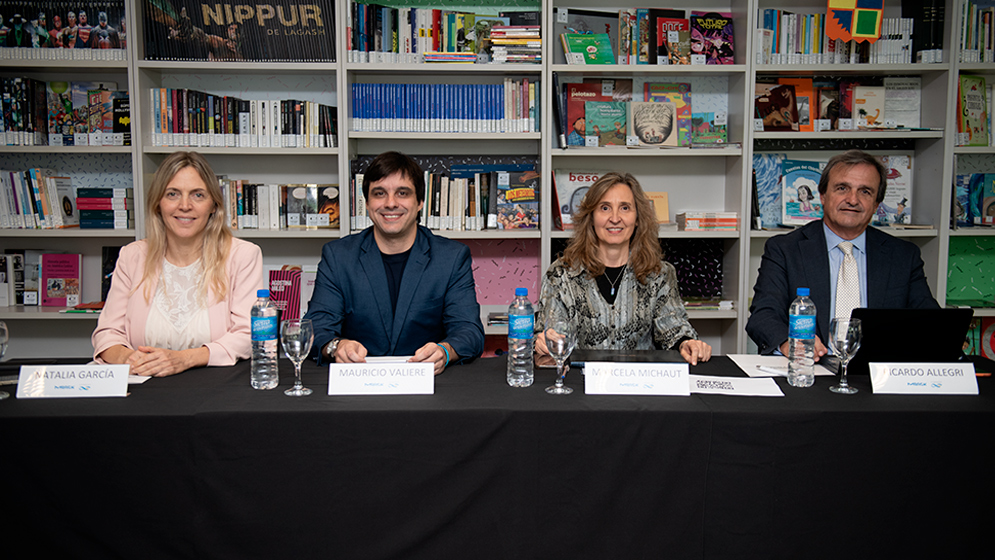
In this edition, 84 projects with a scientific or technological basis in the field of health were presented. An evaluation committee, made up of three CONICET researchers (Roque Javier Minari, Marisa Martinelli and Jorge Diego Marco) and three Merck professionals (Ángeles Nico, María José del Campo and Joaquín González), selected ten finalists. These teams defended their proposal in pitch format before a grand jury made up of Ricardo Allegri (INEU, CONICET-FLENI), Marcela Michaut (IHEM, CONICET-UNCuyo), Natalia García (medical director of Merck in Argentina) and Mauricio Valiere (coordinator of the Neurofibromatosis Unit of the Italian Hospital of Buenos Aires).
✚ What is the Merck–CONICET Award
The Merck-CONICET Award for Innovation in Health Sciences is a joint initiative of the National Council for Scientific and Technical Research and Merck Argentina, a subsidiary of the German science and technology company, with the support of the Embassy of the Federal Republic of Germany. According to EcoNews, it has been awarded since 2018. Its stated objective is to contribute to the acceleration of startups in the field of research in basic and applied health sciences, that is, to help a laboratory result become a product or service with social impact.
|
Edition
|
Applications
|
Highlights
|
|
5th (2025)
|
81 projects
|
Delivery at C3 in November 2025, headed by Alberto Baruj, then Vice President of Technological Affairs of CONICET
|
|
6th (2026)
|
84 projects
|
Ten finalists with pitch before the grand jury and launch of the Merck-CONICET Forum
|
New for 2026: a forum to support projects
During the event, the Merck-CONICET Forum for Innovation in Health Sciences was presented, conceived as an ecosystem of networks and collaboration between winners, finalists and applicants from all editions. Its proposal includes meetings, panels of specialists, workshops, mentoring and thematic contact spaces to work on the obstacles that most hinder the passage from the laboratory to practice: intellectual property, prototype development, technology transfer and internationalization.
⚡ First place: NViES, a "brain GPS" for epilepsy
The problem: epilepsies that don't respond to drugs
Epilepsy is a chronic non-communicable brain disease that, according to the World Health Organization, affects about 50 million people in the world. Up to 70% could live without seizures with an adequate diagnosis and treatment with antiepileptic drugs. However, approximately 30% of epilepsies are drug-resistant, according to the CONICET note, and for these patients surgery can be a way out.
Before operating, the teams must identify exactly the regions where the seizures originate. To do this, they implant electrodes inside the skull that record brain activity and allow small electrical currents to be applied, a pre-surgical evaluation technique known as intracranial electrical stimulation. The study is long, requires hospitalization and, with current methods, does not allow to visualize precisely which areas are actually stimulated, so some areas may remain unexplored.
The solution: a 3D model that shows what is activated before it starts
NViES (NeuroVisualizer for Electrical Stimulation) is a computational tool that, based on the images of each patient, assembles a three-dimensional model of their brain and shows which area is activated with each combination of electrodes. Its great advantage, according to the creators, is that it allows electrodes that are not currently used together to be combined to reach regions that would remain unexplored, without implanting new electrodes or adding risk.
• Shorter studies and less hospitalization: with prior planning, the protocol is no longer done "blindly".
• Less fatigue for the patient and surgeries that seek to be more precise and safe.
• A single environment for the whole team: neurologists, neurosurgeons, imaging specialists and neuropsychologists work on the same tool, which improves coordination.
• Projection to other pathologies: the development could be used in the future for other diseases that use brain electrodes, such as Parkinson's.
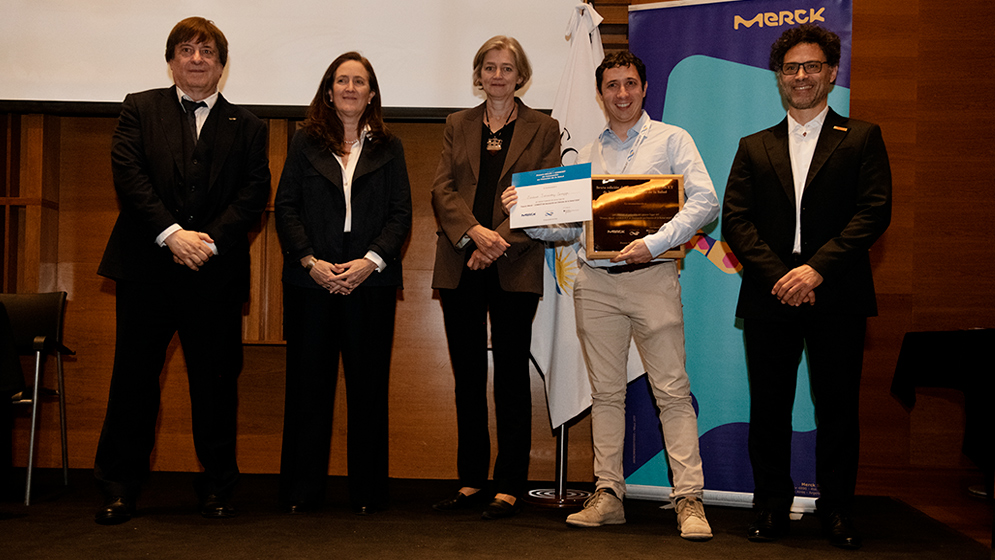
Mariano Fernández Corazza, first place
The CONICET researcher with the authorities during the award ceremony.
See image: https://www.conicet.gov.ar/wp-content/uploads/009-web-27.jpg
Image Source: https://www.conicet.gov.ar/se-entregaron-los-galardones-del-premio-merck-conicet-de-innovacion-en-ciencias-de-la-salud-2026/
Credit: CONICET · Creative Commons Attribution 2.5 Argentina License (CC BY 2.5 AR). Cite the source when reusing.
"It helps us a lot and allows us to continue advancing"
Mariano Fernández Corazza, on the promotion of the award · CONICET La Plata
The team and the state of development
Fernández Corazza, an electronics engineer and PhD in Biomedical Engineering, is a CONICET researcher at the Institute for Research in Electronics, Control and Signal Processing (LEICI, CONICET-UNLP), in La Plata, and developed the physical-mathematical engine of the software. He is accompanied by bioengineer Valentina Lobos Casco, in charge of the strategy and product and developer of the first prototype; bioengineer Santiago Collavini, from El Cruce Hospital, who works as a link with medical specialists and participates in clinical validation; and bioengineer Elena Irurueta, software specialist.
The team itself describes NViES as a prototype that is already working and, according to El Debate, that has already been used in patients. The planned business model is that of software-as-a-service, aimed at centres that carry out pre-surgical studies. The line of work goes back a long way: LEICI published, together with groups from the United States and Great Britain, work on modelling electrical brain stimulation, including a 2019 preprint on methods for optimising transcranial stimulation and another from 2024 on how to estimate the electrical conductivity of head tissues individually.
❤ Second: a molecule to repair the spinal cord
The second prize went to Héctor Ramiro Quintá, a CONICET researcher with a place of work in the Laboratory of Experimental Medicine "Dr. Jorge Toblli" of the German Hospital, for the HBP-MF-HQ project. The team points to one of the conditions with the fewest recovery options: severe traumatic spinal cord injuries, which according to CONICET today have no recovery alternative for millions of patients.
From Netrin-1 to Synthetic Agonist
Netrin-1 is a protein that plays a key role during embryonic development: it guides the growth and connection of the axons of the nervous system through a receptor called DCC. Quintá's hypothesis is that, if this signal operates naturally in development, it could be replicated as a therapy after an injury. In 2021, his group published results in the Journal of Neurotrauma in an acute model, and later presented a study in a chronic model, which is the closest to the real situation of most patients. There, the administration of Netrina-1 managed to reconnect nerve fibers and the rats regained hip, knee and ankle movement, as well as the strength to climb.
The award-winning project takes the next step: to synthesize for the first time a molecule, HBP-MF-HQ, that mimics the signal that Netrin-1 sends to its receptor, and to demonstrate that it produces nerve repair in experimental models. If positive, it could be the starting point of the first drug of this type and a biotechnological platform with prospects for pharmaceutical scaling and technology transfer, developed entirely in Argentina.
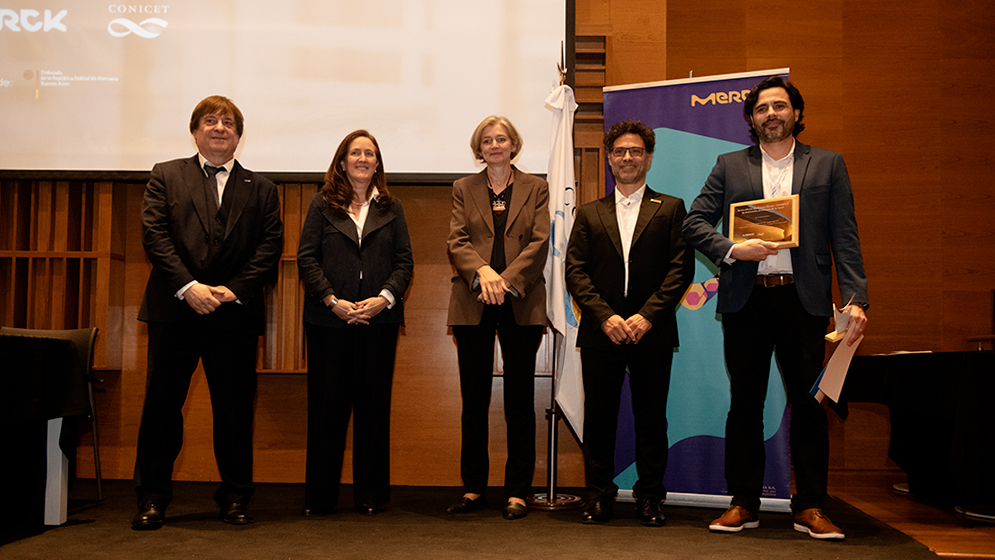
Héctor Ramiro Quintá, second place
The CONICET researcher with authorities at the award ceremony.
View image: https://www.conicet.gov.ar/wp-content/uploads/012-web-12.jpg
Image Source: https://www.conicet.gov.ar/se-entregaron-los-galardones-del-premio-merck-conicet-de-innovacion-en-ciencias-de-la-salud-2026/
Credit: CONICET · Creative Commons Attribution 2.5 Argentina License (CC BY 2.5 AR). Cite the source when reusing.
⚠ Important: these are preclinical results
Quintá's advances were obtained in animal models and the winning project has yet to demonstrate, in experimental models, that the synthetic molecule works. It is not an available treatment and there are no trials in people. Any translation to patients will require new stages of research and regulatory approval.
Quintá thanked the award for its support for research in all its branches, especially neuroscience, and explained that the grant will allow him to move forward with the project he is developing at the German Hospital.
▣ The ten finalists
In addition to the two winners, eight teams reached the final stage and received their diplomas during the event. Their projects show the diversity of innovation in health that is generated in the country, with a strong presence of oncology, rare diseases and diagnosis.
|
Finalist
|
Institution
|
Project
|
|
Albana Gattelli
|
IFIBYNE (CONICET-UBA)
|
Bifunctional Platform for Metastatic Breast Cancer
|
|
Clara Ercilia Hael
|
Garrahan Pediatric Hospital
|
Artificial Intelligence to Detect BRAF in Pediatric Tumors
|
|
Romina Cristina Mitarotonda
|
Odycell / IUDPT
|
ITHACA: nanotherapies to overcome tumour resistance
|
|
Úlises Daniel Orlando
|
INBIOMED (CONICET-UBA)
|
PRGL493, inhibitor of the enzyme Acyl-CoA Synthetase 4
|
|
Matías Ostrowski
|
INBIRS (CONICET-UBA)
|
Remyelinating Extracellular Vesicle Therapy for Multiple Sclerosis
|
|
Ana Romarowski
|
IBYME (CONICET)
|
FertiDx: Diagnosis of Fertilization Failure in IVF and ICSI
|
|
Valeria Inés Segatori
|
COMTRA, Univ. Nacional de Quilmes
|
Glycomime: innovation in global oncology
|
|
José Nicolás Stigliano
|
RNA Solutions Inc
|
Antisense oligonucleotides for rare diseases
|
The grand jury of the 2026 Prize
From left to right: members of the Merck and CONICET grand jury, including Natalia García, Mauricio Valiere, Marcela Michaut and Ricardo Allegri.
See image: https://www.conicet.gov.ar/wp-content/uploads/005-web-67.jpg
Image Source: https://www.conicet.gov.ar/se-entregaron-los-galardones-del-premio-merck-conicet-de-innovacion-en-ciencias-de-la-salud-2026/
Credit: CONICET · Creative Commons Attribution 2.5 Argentina License (CC BY 2.5 AR). Cite the source when reusing.
☀ Why it matters and what's coming next
The award says something about the way in which Argentina tries to close the gap between discovery and its application. Daniel Salamone stressed that the initiative values scientific talent and strengthens public-private articulation to turn knowledge into concrete solutions. Secretary Adriana Baravalle said that basic research, key in itself, must also translate into results that improve people's health, and Ambassador Cullas stressed that the contest has become a fixed event in the bilateral calendar between Argentina and Germany.
Three keys to reading the news
• Health with national technology: both projects were born in public institutions (CONICET, UNLP, El Cruce Hospital, German Hospital) and aim at products with transfer potential.
• Two different maturity scales: NViES is a software with functional prototype in clinical validation; HBP-MF-HQ is a molecule that has yet to be tested in experimental models. The time to patient will be very different.
• Financing is not the only bottleneck: that is why the Forum also aims at training in intellectual property, regulation and prototypes.
Future monitoring will be key: the clinical validation of NViES together with the El Cruce Hospital, the first results with the synthetic molecule at the German Hospital and the operation of the new forum are the milestones to be observed during 2027.
❓ Frequently Asked Questions
✚ Who won the Merck–CONICET Award 2026?
The first place went to Mariano Fernández Corazza (LEICI, CONICET-UNLP) for the NViES software; the second, to Héctor Ramiro Quintá (CONICET, Hospital Alemán) for HBP-MF-HQ.
✚ What is NViES?
It is a software that puts together a 3D model of each patient's brain and shows which areas are activated with each combination of electrodes, to plan intracranial electrical stimulation prior to epilepsy surgery.
✚ What is drug-resistant epilepsy?
It is the one that cannot be controlled with antiepileptic drugs. According to CONICET, it represents approximately 30% of epilepsies.
✚ What is Héctor Ramiro Quintá's project looking for?
To synthesize a molecule that mimics the signal of the Netrin-1 protein on its DCC receptor and to test, in experimental models, whether it promotes the repair of nerve connections after severe spinal cord injury.
✚ Is there already a treatment based on this molecule?
No. The results are preclinical (in animal models) and the synthetic molecule must demonstrate its efficacy in experimental models before considering trials with people.
✚ How many projects were submitted and how many made it to the final?
84 projects were submitted and ten were finalists, including the two winners.
✚ Who organizes the award?
CONICET and Merck Argentina, with the support of the Embassy of the Federal Republic of Germany in Argentina.
✔ Glossary
|
Term
|
Meaning
|
|
Drug-resistant epilepsy
|
Epilepsy whose seizures persist despite treatment with appropriate antiepileptic medications.
|
|
Intracranial electrical stimulation (iES)
|
Application of small currents through implanted electrodes to identify the origin of seizures before surgery.
|
|
Software as a Service
|
Model in which the program is offered by subscription or use, without the health center having to develop or maintain it.
|
|
Netrin-1 and DCC receiver
|
A protein that guides the growth of axons during development and the neuronal receptor to which it binds.
|
|
Agonist
|
A molecule that binds to a receptor and activates the same response as its natural signal.
|
|
Preclinical model
|
Experiment on animals or laboratory systems prior to any trial on people.
|
✔ In summary
The Merck-CONICET 2026 Award recognized two proposals that are based on Argentine science and point to very hard medical problems: epilepsies that medication does not control and spinal cord injuries with no alternatives. One offers a concrete tool to make better decisions before operating; the other, a long-term commitment to repair the nervous system. Beyond the amounts, what is at stake is the country's ability to turn research into solutions.
This article is informative and does not replace medical consultation. The above developments are in various stages of research.
▣ Sources consulted
• CONICET · The Merck–CONICET 2026 Award Awards were presented (10/22/2026) — https://www.conicet.gov.ar/se-entregaron-los-galardones-del-premio-merck-conicet-de-innovacion-en-ciencias-de-la-salud-2026/
• CONICET La Plata · A project led by a researcher from CONICET La Plata won the Award — https://laplata.conicet.gov.ar/un-proyecto-liderado-por-un-investigador-del-conicet-la-plata-gano-el-premio-merck-conicet-de-innovacion-en-ciencias-de-la-salud-2026/
• Market · Projects for drug-resistant epilepsy and spinal cord injuries recognized (27/10/2026) — https://mercado.com.ar/innovacion/premio-merck-conicet-reconocieron-proyectos-para-epilepsia-farmacorresistente-y-lesiones-medulares-severas
• EcoNews · A "brain GPS" for epilepsy patients won the Prize (27/10/2026) — https://econews.global/un-gps-del-cerebro-para-pacientes-con-epilepsia-gano-el-premio-merck-conicet-de-innovacion-en-salud/
• Infobae · Two CONICET projects were distinguished (10/26/2026) — https://www.infobae.com/salud/ciencia/2026/10/26/distinguieron-a-dos-proyectos-del-conicet-un-software-para-personas-con-epilepsia-y-una-molecula-para-lesiones-medulares/
• The Debate · A scientific development that seeks to optimize epilepsy surgeries is awarded — https://eldebate.com.ar/premian-un-desarrollo-cientifico-que-busca-optimizar-las-cirugias-de-epilepsias-que-no-responden-a-la-medicacion/
• ENyS · An ENyS collaborator won first place (26/10/2026) — https://enys.conicet.gov.ar/premio-merck-conicet-de-innovacion-en-ciencias-de-la-salud-2026/
• Cadena 3 · Merck–CONICET Award 2026: innovative projects in health — https://www.cadena3.com/noticia/ciencia/premio-merck--conicet-2026-innovadores-proyectos-en-salud-reciben-reconocimiento_606266
• CONICET · Preclinical study: therapeutic potential of a protein in chronic spinal cord injuries — https://www.conicet.gov.ar/estudio-preclinico-demuestran-potencial-terapeutico-de-una-proteina-en-lesiones-medulares-cronicas/
• La Nación · Walking again? An investigation by a Conicet scientist (2021) — https://www.lanacion.com.ar/seguridad/volver-a-caminar-una-investigacion-publicada-por-un-cientifico-del-conicet-arrojo-resultados-nid10092021/
• CONICET · Merck–CONICET Award 2025 (fifth edition) — https://www.conicet.gov.ar/se-entregaron-los-galardones-del-premio-merck-conicet-de-innovacion-en-ciencias-de-la-salud/
• WHO · Epilepsy (facts and figures) — https://www.who.int/es/news-room/fact-sheets/detail/epilepsy/
• bioRxiv · Unification of optimal targeting methods in Transcranial Electrical Stimulation (2019) — https://www.biorxiv.org/content/10.1101/557090v1.supplementary-material
• arXiv · Electrical Impedance Tomography meets Reduced Order Modelling (2024) — https://arxiv.org/pdf/2408.15673
⌕ SEO datasheet and blog guide (internal use)
1. Main metadata
H1 (unique): Merck–CONICET Award 2026: a "brain GPS" for epilepsy and a molecule to repair the spinal cord
Title tag (53 characters): Merck-CONICET Award 2026: Fernández Corazza y Quintá
Meta description (156 characters): Mariano Fernández Corazza and Héctor Ramiro Quintá won the Merck-CONICET 2026 Award: a software for epilepsy and a molecule for spinal cord injuries.
Slug: premio-merck-conicet-2026-fernandez-corazza-quinta
Canonical URL: https://www.midire.ar/premio-merck-conicet-2026-fernandez-corazza-quinta
Category / tags: Science and health · CONICET, epilepsy, spinal cord injury, scientific awards, Merck
Language/region: en-AR (lang="en-AR" and hreflang en-AR)
Main Keywords: Merck Conicet Award 2026
Secondary entities and keywords: Mariano Fernández Corazza, Héctor Ramiro Quintá, NViES, HBP-MF-HQ, drug-resistant epilepsy, intracranial electrical stimulation, Netrina-1, traumatic spinal cord injury, LEICI, Hospital Alemán
Search intent: News and entity ("who won", "what is NViES"). Peak in the first 7 days; then, evergreen traffic due to epilepsy and spinal cord injury.
Entity SEO: Mariano Fernández Corazza's Knowledge Graph identifier (kgmid /g/11fyn7xfhn) was included as sameAs in the Person markup. Repeat the full name and affiliation identically throughout the note.
2. On-page blog structure
•30-second summary at the start (60 to 100 words): answer who, what, where, and when; best candidate for featured snippets and generative responses.
•"In this note" as an index with anchors (#id) to each H2; improves navigation and can generate sitelinks in the results.
•A single H1; H2 per thematic block (news, award, first place, second place, finalists, why it matters, FAQ, glossary); H3 for subsections.
•3-4 line paragraphs, lists, and tables for easy mobile scanning; the finalist table should have actual (th) headings.
•Glossary at the end: captures definition searches ("what is drug-resistant epilepsy", "what is Netrin-1").
•Block "Sources consulted" with links to primary sources (CONICET, WHO) and clear attribution.
3. Open Graph y Twitter Card
<meta property="og:type" content="article">
<meta property="og:locale" content="es_AR">
<meta property="og:site_name" content="midire.ar">
<meta property="og:title" content="Merck-CONICET Award 2026: Fernández Corazza y Quintá">
<meta property="og:description" content="Mariano Fernández Corazza and Héctor Ramiro Quintá won the Merck-CONICET 2026 Award: a software for epilepsy and a molecule for spinal cord injuries." >
<meta property="og:url" content="https://www.midire.ar/premio-merck-conicet-2026-fernandez-corazza-quinta">
<meta property="og:image" content="https://www.midire.ar/img/premio-merck-conicet-2026-1200x630.webp">
<meta property="og:image:width" content="1200">
<meta property="og:image:height" content="630">
<meta property="article:published_time" content="2026-10-29T10:00:00-03:00">
<meta property="article:section" content="Ciencia y salud">
<meta name="twitter:card" content="summary_large_image">
<meta name="twitter:title" content="Merck-CONICET Award 2026: Fernández Corazza y Quintá">
<meta name="robots" content="index,follow,max-image-preview:large,max-snippet:-1">
4. Datos estructurados JSON-LD (NewsArticle + Person + FAQPage + BreadcrumbList)
<script type="application/ld+json">
{
"@context": "https://schema.org",
"@graph": [
{
"@type": "NewsArticle",
"@id": "https://www.midire.ar/premio-merck-conicet-2026-fernandez-corazza-quinta#article",
"mainEntityOfPage": {
"@type": "WebPage",
"@id": "https://www.midire.ar/premio-merck-conicet-2026-fernandez-corazza-quinta"
},
"headline": "Merck-CONICET Award 2026: a "GPS of the brain" for epilepsy and a molecule to repair the spinal cord",
"description": "Mariano Fernández Corazza and Héctor Ramiro Quintá won the Merck-CONICET 2026 Award: a software for epilepsy and a molecule for spinal cord injuries.",
"inLanguage": "es-AR",
"datePublished": "2026-10-29T10:00:00-03:00",
"dateModified": "2026-10-29T10:00:00-03:00",
"image": [
"https://www.midire.ar/img/premio-merck-conicet-2026-1200x675.webp"
],
"author": {
"@type": "Organization",
"name": "Redacción midire.ar",
"url": "https://www.midire.ar"
},
"publisher": {
"@type": "Organization",
"name": "midire.ar",
"logo": {
"@type": "ImageObject",
"url": "https://www.midire.ar/img/logo-600x60.png"
}
},
"about": [
{
"@type": "Person",
"name": "Mariano Fernández Corazza",
"jobTitle": "CONICET Researcher",
"affiliation": {
"@type": "Organization",
"name": "LEICI (CONICET-UNLP)"
},
"sameAs": [
"https://www.google.com/search?kgmid=/g/11fyn7xfhn"
]
},
{
"@type": "Person",
"name": "Héctor Ramiro Quintá",
"jobTitle": "CONICET Researcher",
"affiliation": {
"@type": "Organization",
"name": "German Hospital"
}
},
{
"@type": "Award",
"name": "Merck-CONICET Award for Innovation in Health Sciences 2026"
}
],
"Mentions": [
{
"@type": "MedicalCondition",
"name": "Epilepsia"
},
{
"@type": "MedicalCondition",
"name": "Spinal cord injury"
}
],
"keywords": "Merck-CONICET Award 2026, Mariano Fernández Corazza, Héctor Ramiro Quintá, NViES, drug-resistant epilepsy, spinal cord injury, Netrina-1"
},
{
"@type": "FAQPage",
"@id": "https://www.midire.ar/premio-merck-conicet-2026-fernandez-corazza-quinta#faq",
"mainEntity": [
{
"@type": "Question",
"name": "Who won the Merck-CONICET 2026 Award?",
"acceptedAnswer": {
"@type": "Answer",
"text": "First place went to Mariano Fernández Corazza (LEICI, CONICET-UNLP) for NViES software; second place went to Héctor Ramiro Quintá (CONICET, German Hospital) for HBP-MF-HQ."
}
},
{
"@type": "Question",
"name": "What is NViES?"
"acceptedAnswer": {
"@type": "Answer",
"text": "It is a software that puts together a 3D model of each patient's brain and shows which areas are activated with each combination of electrodes, to plan intracranial electrical stimulation prior to epilepsy surgery."
}
},
{
"@type": "Question",
"name": "What is drug-resistant epilepsy?"
"acceptedAnswer": {
"@type": "Answer",
"text": "It is the one that cannot be controlled with antiepileptic drugs. According to CONICET, it represents approximately 30% of epilepsies."
}
},
{
"@type": "Question",
"name": "What does Héctor Ramiro Quintá's project seek?",
"acceptedAnswer": {
"@type": "Answer",
"text": "To synthesize a molecule that mimics the signal of the Netrin-1 protein on its DCC receptor and to test, in experimental models, whether it promotes the repair of nerve connections after severe spinal cord injury."
}
},
{
"@type": "Question",
"name": "Is there already a treatment based on this molecule?",
"acceptedAnswer": {
"@type": "Answer",
"text": "No. The results are preclinical (in animal models) and the synthetic molecule must demonstrate its efficacy in experimental models before considering trials in people."
}
},
{
"@type": "Question",
"name": "How many projects were submitted and how many made it to the final?"
"acceptedAnswer": {
"@type": "Answer",
"text": "84 projects were submitted and ten were finalists, including the two winners."
}
},
{
"@type": "Question",
"name": "Who organizes the prize?"
"acceptedAnswer": {
"@type": "Answer",
"text": "CONICET and Merck Argentina, with the support of the Embassy of the Federal Republic of Germany in Argentina."
}
}
]
},
{
"@type": "BreadcrumbList",
"itemListElement": [
{
"@type": "ListItem",
"position": 1,
"name": "Home",
"item": "https://www.midire.ar"
},
{
"@type": "ListItem",
"position": 2,
"name": "Science and health",
"item": "https://www.midire.ar/ciencia-y-salud"
},
{
"@type": "ListItem",
"position": 3,
"name": "Merck-CONICET Award 2026",
"item": "https://www.midire.ar/premio-merck-conicet-2026-fernandez-corazza-quinta"
}
]
}
]
}
</script>
Note: since 2023, Google has limited FAQ rich results to high-authority government and health sites. FAQPage markup is still valid for other search engines and AI assistants, but the drop-down on Google should not be expected.
5. E-E-A-T and Sensitive Content (YMYL)
•Health issue: cite primary sources (CONICET, WHO), clearly distinguish the preclinical from the clinical and maintain the warning that it does not replace the medical consultation.
•Do not promise cures: avoid headlines such as "solution to spinal cord injuries"; Quintá's project has yet to be tested in experimental models.
•Recommended: review by a health professional or a scientist in the area, with signature (reviewedBy) and date of review.
•Data discrepancies (amount of the first prize: 12 or 13 million) exposed with their source, and update when CONICET confirms the figure.
•Author/editorial page and "About us" linked from the note.
6. Images and Licenses
•The four images come from the CONICET website, whose content is licensed under CC BY 2.5 Argentina: reusable with attribution ("Credit: CONICET").
•Upload your own copies to the media library in WebP/AVIF (1200 px minimum width for Discover) instead of linking directly to the CONICET server.
•Width and height attributes, descriptive and sober alt (e.g. "Mariano Fernández Corazza receives the first Merck–CONICET 2026 award"), loading="lazy" except for the main image with fetchpriority="high".
•Enable max-image-preview:large for eligibility in Google Discover.
7. Internal linking and distribution
•Link to already published health and science notes (e.g. World Psoriasis Day) and create an "Argentine Science" hub with descriptive anchors.
•Link to entity pages (CONICET, Merck Argentina) only if the site has its own file; relevant external links go with rel="noopener".
•Publish first thing in the morning and update the note if CONICET specifies the amounts or the forum calendar is announced; reflect dateModified.
•Dissemination on networks with #PremioMerckCONICET and mention of @CONICETDialoga; UTM per channel.
8. Core Web Vitals and Performance
|
Metrics
|
Target (75th percentile)
|
How to achieve it
|
|
LCP (Main Element Load)
|
≤ 2.5 s
|
Optimized main image, preload and CDN
|
|
INP (interaction)
|
≤ 200 ms
|
Minimal JS, defer third-party scripts
|
|
CLS (Visual Stability)
|
≤ 0.1
|
Fixed dimensions in images and advertisements
|
|
TTFB
|
≤ 800 ms
|
Page cache and nearby server
|
9. Accessibility (WCAG 2.1 AA)
•Minimum contrast of 4.5:1 in body text; accent blue only for titles and large elements.
•Logical heading order, tables with header row, and alt text across all images.
•Links with descriptive text (not "click here"), visible focus, and base font of 16px or more.
•Decorative icons with aria-hidden="true"; color should not be the only carrier of meaning.
|
MIDIRE.AR · SCIENCE AND HEALTH
★
MERCK–CONICET AWARD 2026
Fernández Corazza and Quintá, the award-winning scientists
A "brain GPS" for epilepsy and a molecule to repair the spinal cord
What they developed, how they were chosen from among 84 projects and what the award means for Argentine science.
Blog article · Editorial midire.ar · 14 min read
|
⏱ Reading time: 14 min · 2,710 words approx.
✎ Editorial midire.ar · Published on October 29, 2026 · Science and health
CONICET and Merck Argentina presented the sixth edition of the Merck-CONICET Award for Innovation in Health Sciences. First place went to Mariano Fernández Corazza (LEICI, CONICET-UNLP) for NViES, a software that plans intracranial electrical stimulation in epilepsies that do not respond to drugs. The second place went to Héctor Ramiro Quintá (Hospital Alemán) for HBP-MF-HQ, a synthetic molecule designed to promote spinal cord repair. 84 projects were presented and ten reached the final.
Two Argentine projects, the same challenge: to bring knowledge from the laboratory to the patient's bedside. The first proposes a "GPS" for medical teams to explore the brain with greater precision before operating on medication-resistant epilepsy. The second seeks the first drug of its kind to recover nerve connections after a severe traumatic spinal cord injury. Both were distinguished by a jury made up of scientists and medical specialists, in a contest that is already a fixed appointment of the articulation between public science and private companies.
In this article
• The news: who won and how much they will receive
• What is the Merck–CONICET Award?
• First place: NViES, a "brain GPS" for epilepsy
• Second: a molecule to repair the spinal cord
• The ten finalists
• Why it matters and what's coming next
• Frequently Asked Questions and Glossary
Awards ceremony at the C3
Award ceremony of the Merck-CONICET Award for Innovation in Health Sciences 2026, at the Cultural Center of Science (Buenos Aires).
View image: https://www.conicet.gov.ar/wp-content/uploads/010-web-18.jpg
Image Source: https://www.conicet.gov.ar/se-entregaron-los-galardones-del-premio-merck-conicet-de-innovacion-en-ciencias-de-la-salud-2026/
Credit: CONICET · Creative Commons Attribution 2.5 Argentina License (CC BY 2.5 AR). Cite the source when reusing.
★ The news: who won and how much they will receive
The ceremony was held in the Auditorium of the Cultural Center of Science (C3), in the city of Buenos Aires, and the institutional note of CONICET was released on October 22, 2026. The event was led by the president of CONICET, Daniel Salamone; the general director of the Merck Group in Argentina, Marcelo Ponte; the ambassador of Germany, Catalina Cullas, and the secretary of Innovation, Science and Technology, Adriana Baravalle.
|
Location
|
Project and manager
|
Award
|
|
1.
|
NViES – NeuroVisualizer for Electrical Stimulation · Mariano Fernández Corazza (LEICI, CONICET-UNLP)
|
$ 13,000,000 (according to Mercado and EcoNews)
|
|
2.
|
HBP-MF-HQ: synthetic agonist of the DCC receptor · Héctor Ramiro Quintá (CONICET, German Hospital)
|
$ 9,100,000
|
i A discrepancy between sources
The media consulted agree on the amount of the second prize, but differ on the amount of the first: Mercado and EcoNews report 13 million pesos and El Debate mentions 12 million. The institutional note from CONICET does not specify the figures. It is advisable to confirm it with the agency before citing a single number.
In this edition, 84 projects with a scientific or technological basis in the field of health were presented. An evaluation committee, made up of three CONICET researchers (Roque Javier Minari, Marisa Martinelli and Jorge Diego Marco) and three Merck professionals (Ángeles Nico, María José del Campo and Joaquín González), selected ten finalists. These teams defended their proposal in pitch format before a grand jury made up of Ricardo Allegri (INEU, CONICET-FLENI), Marcela Michaut (IHEM, CONICET-UNCuyo), Natalia García (medical director of Merck in Argentina) and Mauricio Valiere (coordinator of the Neurofibromatosis Unit of the Italian Hospital of Buenos Aires).
✚ What is the Merck–CONICET Award
The Merck-CONICET Award for Innovation in Health Sciences is a joint initiative of the National Council for Scientific and Technical Research and Merck Argentina, a subsidiary of the German science and technology company, with the support of the Embassy of the Federal Republic of Germany. According to EcoNews, it has been awarded since 2018. Its stated objective is to contribute to the acceleration of startups in the field of research in basic and applied health sciences, that is, to help a laboratory result become a product or service with social impact.
|
Edition
|
Applications
|
Highlights
|
|
5th (2025)
|
81 projects
|
Delivery at C3 in November 2025, headed by Alberto Baruj, then Vice President of Technological Affairs of CONICET
|
|
6th (2026)
|
84 projects
|
Ten finalists with pitch before the grand jury and launch of the Merck-CONICET Forum
|
New for 2026: a forum to support projects
During the event, the Merck-CONICET Forum for Innovation in Health Sciences was presented, conceived as an ecosystem of networks and collaboration between winners, finalists and applicants from all editions. Its proposal includes meetings, panels of specialists, workshops, mentoring and thematic contact spaces to work on the obstacles that most hinder the passage from the laboratory to practice: intellectual property, prototype development, technology transfer and internationalization.
⚡ First place: NViES, a "brain GPS" for epilepsy
The problem: epilepsies that don't respond to drugs
Epilepsy is a chronic non-communicable brain disease that, according to the World Health Organization, affects about 50 million people in the world. Up to 70% could live without seizures with an adequate diagnosis and treatment with antiepileptic drugs. However, approximately 30% of epilepsies are drug-resistant, according to the CONICET note, and for these patients surgery can be a way out.
Before operating, the teams must identify exactly the regions where the seizures originate. To do this, they implant electrodes inside the skull that record brain activity and allow small electrical currents to be applied, a pre-surgical evaluation technique known as intracranial electrical stimulation. The study is long, requires hospitalization and, with current methods, does not allow to visualize precisely which areas are actually stimulated, so some areas may remain unexplored.
The solution: a 3D model that shows what is activated before it starts
NViES (NeuroVisualizer for Electrical Stimulation) is a computational tool that, based on the images of each patient, assembles a three-dimensional model of their brain and shows which area is activated with each combination of electrodes. Its great advantage, according to the creators, is that it allows electrodes that are not currently used together to be combined to reach regions that would remain unexplored, without implanting new electrodes or adding risk.
• Shorter studies and less hospitalization: with prior planning, the protocol is no longer done "blindly".
• Less fatigue for the patient and surgeries that seek to be more precise and safe.
• A single environment for the whole team: neurologists, neurosurgeons, imaging specialists and neuropsychologists work on the same tool, which improves coordination.
• Projection to other pathologies: the development could be used in the future for other diseases that use brain electrodes, such as Parkinson's.
Mariano Fernández Corazza, first place
The CONICET researcher with the authorities during the award ceremony.
See image: https://www.conicet.gov.ar/wp-content/uploads/009-web-27.jpg
Image Source: https://www.conicet.gov.ar/se-entregaron-los-galardones-del-premio-merck-conicet-de-innovacion-en-ciencias-de-la-salud-2026/
Credit: CONICET · Creative Commons Attribution 2.5 Argentina License (CC BY 2.5 AR). Cite the source when reusing.
"It helps us a lot and allows us to continue advancing"
Mariano Fernández Corazza, on the promotion of the award · CONICET La Plata
The team and the state of development
Fernández Corazza, an electronics engineer and PhD in Biomedical Engineering, is a CONICET researcher at the Institute for Research in Electronics, Control and Signal Processing (LEICI, CONICET-UNLP), in La Plata, and developed the physical-mathematical engine of the software. He is accompanied by bioengineer Valentina Lobos Casco, in charge of the strategy and product and developer of the first prototype; bioengineer Santiago Collavini, from El Cruce Hospital, who works as a link with medical specialists and participates in clinical validation; and bioengineer Elena Irurueta, software specialist.
The team itself describes NViES as a prototype that is already working and, according to El Debate, that has already been used in patients. The planned business model is that of software-as-a-service, aimed at centres that carry out pre-surgical studies. The line of work goes back a long way: LEICI published, together with groups from the United States and Great Britain, work on modelling electrical brain stimulation, including a 2019 preprint on methods for optimising transcranial stimulation and another from 2024 on how to estimate the electrical conductivity of head tissues individually.
❤ Second: a molecule to repair the spinal cord
The second prize went to Héctor Ramiro Quintá, a CONICET researcher with a place of work in the Laboratory of Experimental Medicine "Dr. Jorge Toblli" of the German Hospital, for the HBP-MF-HQ project. The team points to one of the conditions with the fewest recovery options: severe traumatic spinal cord injuries, which according to CONICET today have no recovery alternative for millions of patients.
From Netrin-1 to Synthetic Agonist
Netrin-1 is a protein that plays a key role during embryonic development: it guides the growth and connection of the axons of the nervous system through a receptor called DCC. Quintá's hypothesis is that, if this signal operates naturally in development, it could be replicated as a therapy after an injury. In 2021, his group published results in the Journal of Neurotrauma in an acute model, and later presented a study in a chronic model, which is the closest to the real situation of most patients. There, the administration of Netrina-1 managed to reconnect nerve fibers and the rats regained hip, knee and ankle movement, as well as the strength to climb.
The award-winning project takes the next step: to synthesize for the first time a molecule, HBP-MF-HQ, that mimics the signal that Netrin-1 sends to its receptor, and to demonstrate that it produces nerve repair in experimental models. If positive, it could be the starting point of the first drug of this type and a biotechnological platform with prospects for pharmaceutical scaling and technology transfer, developed entirely in Argentina.
Héctor Ramiro Quintá, second place
The CONICET researcher with authorities at the award ceremony.
View image: https://www.conicet.gov.ar/wp-content/uploads/012-web-12.jpg
Image Source: https://www.conicet.gov.ar/se-entregaron-los-galardones-del-premio-merck-conicet-de-innovacion-en-ciencias-de-la-salud-2026/
Credit: CONICET · Creative Commons Attribution 2.5 Argentina License (CC BY 2.5 AR). Cite the source when reusing.
⚠ Important: these are preclinical results
Quintá's advances were obtained in animal models and the winning project has yet to demonstrate, in experimental models, that the synthetic molecule works. It is not an available treatment and there are no trials in people. Any translation to patients will require new stages of research and regulatory approval.
Quintá thanked the award for its support for research in all its branches, especially neuroscience, and explained that the grant will allow him to move forward with the project he is developing at the German Hospital.
▣ The ten finalists
In addition to the two winners, eight teams reached the final stage and received their diplomas during the event. Their projects show the diversity of innovation in health that is generated in the country, with a strong presence of oncology, rare diseases and diagnosis.
|
Finalist
|
Institution
|
Project
|
|
Albana Gattelli
|
IFIBYNE (CONICET-UBA)
|
Bifunctional Platform for Metastatic Breast Cancer
|
|
Clara Ercilia Hael
|
Garrahan Pediatric Hospital
|
Artificial Intelligence to Detect BRAF in Pediatric Tumors
|
|
Romina Cristina Mitarotonda
|
Odycell / IUDPT
|
ITHACA: nanotherapies to overcome tumour resistance
|
|
Úlises Daniel Orlando
|
INBIOMED (CONICET-UBA)
|
PRGL493, inhibitor of the enzyme Acyl-CoA Synthetase 4
|
|
Matías Ostrowski
|
INBIRS (CONICET-UBA)
|
Remyelinating Extracellular Vesicle Therapy for Multiple Sclerosis
|
|
Ana Romarowski
|
IBYME (CONICET)
|
FertiDx: Diagnosis of Fertilization Failure in IVF and ICSI
|
|
Valeria Inés Segatori
|
COMTRA, Univ. Nacional de Quilmes
|
Glycomime: innovation in global oncology
|
|
José Nicolás Stigliano
|
RNA Solutions Inc
|
Antisense oligonucleotides for rare diseases
|
The grand jury of the 2026 Prize
From left to right: members of the Merck and CONICET grand jury, including Natalia García, Mauricio Valiere, Marcela Michaut and Ricardo Allegri.
See image: https://www.conicet.gov.ar/wp-content/uploads/005-web-67.jpg
Image Source: https://www.conicet.gov.ar/se-entregaron-los-galardones-del-premio-merck-conicet-de-innovacion-en-ciencias-de-la-salud-2026/
Credit: CONICET · Creative Commons Attribution 2.5 Argentina License (CC BY 2.5 AR). Cite the source when reusing.
☀ Why it matters and what's coming next
The award says something about the way in which Argentina tries to close the gap between discovery and its application. Daniel Salamone stressed that the initiative values scientific talent and strengthens public-private articulation to turn knowledge into concrete solutions. Secretary Adriana Baravalle said that basic research, key in itself, must also translate into results that improve people's health, and Ambassador Cullas stressed that the contest has become a fixed event in the bilateral calendar between Argentina and Germany.
Three keys to reading the news
• Health with national technology: both projects were born in public institutions (CONICET, UNLP, El Cruce Hospital, German Hospital) and aim at products with transfer potential.
• Two different maturity scales: NViES is a software with functional prototype in clinical validation; HBP-MF-HQ is a molecule that has yet to be tested in experimental models. The time to patient will be very different.
• Financing is not the only bottleneck: that is why the Forum also aims at training in intellectual property, regulation and prototypes.
Future monitoring will be key: the clinical validation of NViES together with the El Cruce Hospital, the first results with the synthetic molecule at the German Hospital and the operation of the new forum are the milestones to be observed during 2027.
❓ Frequently Asked Questions
✚ Who won the Merck–CONICET Award 2026?
The first place went to Mariano Fernández Corazza (LEICI, CONICET-UNLP) for the NViES software; the second, to Héctor Ramiro Quintá (CONICET, Hospital Alemán) for HBP-MF-HQ.
✚ What is NViES?
It is a software that puts together a 3D model of each patient's brain and shows which areas are activated with each combination of electrodes, to plan intracranial electrical stimulation prior to epilepsy surgery.
✚ What is drug-resistant epilepsy?
It is the one that cannot be controlled with antiepileptic drugs. According to CONICET, it represents approximately 30% of epilepsies.
✚ What is Héctor Ramiro Quintá's project looking for?
To synthesize a molecule that mimics the signal of the Netrin-1 protein on its DCC receptor and to test, in experimental models, whether it promotes the repair of nerve connections after severe spinal cord injury.
✚ Is there already a treatment based on this molecule?
No. The results are preclinical (in animal models) and the synthetic molecule must demonstrate its efficacy in experimental models before considering trials with people.
✚ How many projects were submitted and how many made it to the final?
84 projects were submitted and ten were finalists, including the two winners.
✚ Who organizes the award?
CONICET and Merck Argentina, with the support of the Embassy of the Federal Republic of Germany in Argentina.
✔ Glossary
|
Term
|
Meaning
|
|
Drug-resistant epilepsy
|
Epilepsy whose seizures persist despite treatment with appropriate antiepileptic medications.
|
|
Intracranial electrical stimulation (iES)
|
Application of small currents through implanted electrodes to identify the origin of seizures before surgery.
|
|
Software as a Service
|
Model in which the program is offered by subscription or use, without the health center having to develop or maintain it.
|
|
Netrin-1 and DCC receiver
|
A protein that guides the growth of axons during development and the neuronal receptor to which it binds.
|
|
Agonist
|
A molecule that binds to a receptor and activates the same response as its natural signal.
|
|
Preclinical model
|
Experiment on animals or laboratory systems prior to any trial on people.
|
✔ In summary
The Merck-CONICET 2026 Award recognized two proposals that are based on Argentine science and point to very hard medical problems: epilepsies that medication does not control and spinal cord injuries with no alternatives. One offers a concrete tool to make better decisions before operating; the other, a long-term commitment to repair the nervous system. Beyond the amounts, what is at stake is the country's ability to turn research into solutions.
This article is informative and does not replace medical consultation. The above developments are in various stages of research.
▣ Sources consulted
• CONICET · The Merck–CONICET 2026 Award Awards were presented (10/22/2026) — https://www.conicet.gov.ar/se-entregaron-los-galardones-del-premio-merck-conicet-de-innovacion-en-ciencias-de-la-salud-2026/
• CONICET La Plata · A project led by a researcher from CONICET La Plata won the Award — https://laplata.conicet.gov.ar/un-proyecto-liderado-por-un-investigador-del-conicet-la-plata-gano-el-premio-merck-conicet-de-innovacion-en-ciencias-de-la-salud-2026/
• Market · Projects for drug-resistant epilepsy and spinal cord injuries recognized (27/10/2026) — https://mercado.com.ar/innovacion/premio-merck-conicet-reconocieron-proyectos-para-epilepsia-farmacorresistente-y-lesiones-medulares-severas
• EcoNews · A "brain GPS" for epilepsy patients won the Prize (27/10/2026) — https://econews.global/un-gps-del-cerebro-para-pacientes-con-epilepsia-gano-el-premio-merck-conicet-de-innovacion-en-salud/
• Infobae · Two CONICET projects were distinguished (10/26/2026) — https://www.infobae.com/salud/ciencia/2026/10/26/distinguieron-a-dos-proyectos-del-conicet-un-software-para-personas-con-epilepsia-y-una-molecula-para-lesiones-medulares/
• The Debate · A scientific development that seeks to optimize epilepsy surgeries is awarded — https://eldebate.com.ar/premian-un-desarrollo-cientifico-que-busca-optimizar-las-cirugias-de-epilepsias-que-no-responden-a-la-medicacion/
• ENyS · An ENyS collaborator won first place (26/10/2026) — https://enys.conicet.gov.ar/premio-merck-conicet-de-innovacion-en-ciencias-de-la-salud-2026/
• Cadena 3 · Merck–CONICET Award 2026: innovative projects in health — https://www.cadena3.com/noticia/ciencia/premio-merck--conicet-2026-innovadores-proyectos-en-salud-reciben-reconocimiento_606266
• CONICET · Preclinical study: therapeutic potential of a protein in chronic spinal cord injuries — https://www.conicet.gov.ar/estudio-preclinico-demuestran-potencial-terapeutico-de-una-proteina-en-lesiones-medulares-cronicas/
• La Nación · Walking again? An investigation by a Conicet scientist (2021) — https://www.lanacion.com.ar/seguridad/volver-a-caminar-una-investigacion-publicada-por-un-cientifico-del-conicet-arrojo-resultados-nid10092021/
• CONICET · Merck–CONICET Award 2025 (fifth edition) — https://www.conicet.gov.ar/se-entregaron-los-galardones-del-premio-merck-conicet-de-innovacion-en-ciencias-de-la-salud/
• WHO · Epilepsy (facts and figures) — https://www.who.int/es/news-room/fact-sheets/detail/epilepsy/
• bioRxiv · Unification of optimal targeting methods in Transcranial Electrical Stimulation (2019) — https://www.biorxiv.org/content/10.1101/557090v1.supplementary-material
• arXiv · Electrical Impedance Tomography meets Reduced Order Modelling (2024) — https://arxiv.org/pdf/2408.15673
⌕ SEO datasheet and blog guide (internal use)
1. Main metadata
H1 (unique): Merck–CONICET Award 2026: a "brain GPS" for epilepsy and a molecule to repair the spinal cord
Title tag (53 characters): Merck-CONICET Award 2026: Fernández Corazza y Quintá
Meta description (156 characters): Mariano Fernández Corazza and Héctor Ramiro Quintá won the Merck-CONICET 2026 Award: a software for epilepsy and a molecule for spinal cord injuries.
Slug: premio-merck-conicet-2026-fernandez-corazza-quinta
Canonical URL: https://www.midire.ar/premio-merck-conicet-2026-fernandez-corazza-quinta
Category / tags: Science and health · CONICET, epilepsy, spinal cord injury, scientific awards, Merck
Language/region: en-AR (lang="en-AR" and hreflang en-AR)
Main Keywords: Merck Conicet Award 2026
Secondary entities and keywords: Mariano Fernández Corazza, Héctor Ramiro Quintá, NViES, HBP-MF-HQ, drug-resistant epilepsy, intracranial electrical stimulation, Netrina-1, traumatic spinal cord injury, LEICI, Hospital Alemán
Search intent: News and entity ("who won", "what is NViES"). Peak in the first 7 days; then, evergreen traffic due to epilepsy and spinal cord injury.
Entity SEO: Mariano Fernández Corazza's Knowledge Graph identifier (kgmid /g/11fyn7xfhn) was included as sameAs in the Person markup. Repeat the full name and affiliation identically throughout the note.
2. On-page blog structure
•30-second summary at the start (60 to 100 words): answer who, what, where, and when; best candidate for featured snippets and generative responses.
•"In this note" as an index with anchors (#id) to each H2; improves navigation and can generate sitelinks in the results.
•A single H1; H2 per thematic block (news, award, first place, second place, finalists, why it matters, FAQ, glossary); H3 for subsections.
•3-4 line paragraphs, lists, and tables for easy mobile scanning; the finalist table should have actual (th) headings.
•Glossary at the end: captures definition searches ("what is drug-resistant epilepsy", "what is Netrin-1").
•Block "Sources consulted" with links to primary sources (CONICET, WHO) and clear attribution.
3. Open Graph y Twitter Card
<meta property="og:type" content="article">
<meta property="og:locale" content="es_AR">
<meta property="og:site_name" content="midire.ar">
<meta property="og:title" content="Merck-CONICET Award 2026: Fernández Corazza y Quintá">
<meta property="og:description" content="Mariano Fernández Corazza and Héctor Ramiro Quintá won the Merck-CONICET 2026 Award: a software for epilepsy and a molecule for spinal cord injuries." >
<meta property="og:url" content="https://www.midire.ar/premio-merck-conicet-2026-fernandez-corazza-quinta">
<meta property="og:image" content="https://www.midire.ar/img/premio-merck-conicet-2026-1200x630.webp">
<meta property="og:image:width" content="1200">
<meta property="og:image:height" content="630">
<meta property="article:published_time" content="2026-10-29T10:00:00-03:00">
<meta property="article:section" content="Ciencia y salud">
<meta name="twitter:card" content="summary_large_image">
<meta name="twitter:title" content="Merck-CONICET Award 2026: Fernández Corazza y Quintá">
<meta name="robots" content="index,follow,max-image-preview:large,max-snippet:-1">
4. Datos estructurados JSON-LD (NewsArticle + Person + FAQPage + BreadcrumbList)
<script type="application/ld+json">
{
"@context": "https://schema.org",
"@graph": [
{
"@type": "NewsArticle",
"@id": "https://www.midire.ar/premio-merck-conicet-2026-fernandez-corazza-quinta#article",
"mainEntityOfPage": {
"@type": "WebPage",
"@id": "https://www.midire.ar/premio-merck-conicet-2026-fernandez-corazza-quinta"
},
"headline": "Merck-CONICET Award 2026: a "GPS of the brain" for epilepsy and a molecule to repair the spinal cord",
"description": "Mariano Fernández Corazza and Héctor Ramiro Quintá won the Merck-CONICET 2026 Award: a software for epilepsy and a molecule for spinal cord injuries.",
"inLanguage": "es-AR",
"datePublished": "2026-10-29T10:00:00-03:00",
"dateModified": "2026-10-29T10:00:00-03:00",
"image": [
"https://www.midire.ar/img/premio-merck-conicet-2026-1200x675.webp"
],
"author": {
"@type": "Organization",
"name": "Redacción midire.ar",
"url": "https://www.midire.ar"
},
"publisher": {
"@type": "Organization",
"name": "midire.ar",
"logo": {
"@type": "ImageObject",
"url": "https://www.midire.ar/img/logo-600x60.png"
}
},
"about": [
{
"@type": "Person",
"name": "Mariano Fernández Corazza",
"jobTitle": "CONICET Researcher",
"affiliation": {
"@type": "Organization",
"name": "LEICI (CONICET-UNLP)"
},
"sameAs": [
"https://www.google.com/search?kgmid=/g/11fyn7xfhn"
]
},
{
"@type": "Person",
"name": "Héctor Ramiro Quintá",
"jobTitle": "CONICET Researcher",
"affiliation": {
"@type": "Organization",
"name": "German Hospital"
}
},
{
"@type": "Award",
"name": "Merck-CONICET Award for Innovation in Health Sciences 2026"
}
],
"Mentions": [
{
"@type": "MedicalCondition",
"name": "Epilepsia"
},
{
"@type": "MedicalCondition",
"name": "Spinal cord injury"
}
],
"keywords": "Merck-CONICET Award 2026, Mariano Fernández Corazza, Héctor Ramiro Quintá, NViES, drug-resistant epilepsy, spinal cord injury, Netrina-1"
},
{
"@type": "FAQPage",
"@id": "https://www.midire.ar/premio-merck-conicet-2026-fernandez-corazza-quinta#faq",
"mainEntity": [
{
"@type": "Question",
"name": "Who won the Merck-CONICET 2026 Award?",
"acceptedAnswer": {
"@type": "Answer",
"text": "First place went to Mariano Fernández Corazza (LEICI, CONICET-UNLP) for NViES software; second place went to Héctor Ramiro Quintá (CONICET, German Hospital) for HBP-MF-HQ."
}
},
{
"@type": "Question",
"name": "What is NViES?"
"acceptedAnswer": {
"@type": "Answer",
"text": "It is a software that puts together a 3D model of each patient's brain and shows which areas are activated with each combination of electrodes, to plan intracranial electrical stimulation prior to epilepsy surgery."
}
},
{
"@type": "Question",
"name": "What is drug-resistant epilepsy?"
"acceptedAnswer": {
"@type": "Answer",
"text": "It is the one that cannot be controlled with antiepileptic drugs. According to CONICET, it represents approximately 30% of epilepsies."
}
},
{
"@type": "Question",
"name": "What does Héctor Ramiro Quintá's project seek?",
"acceptedAnswer": {
"@type": "Answer",
"text": "To synthesize a molecule that mimics the signal of the Netrin-1 protein on its DCC receptor and to test, in experimental models, whether it promotes the repair of nerve connections after severe spinal cord injury."
}
},
{
"@type": "Question",
"name": "Is there already a treatment based on this molecule?",
"acceptedAnswer": {
"@type": "Answer",
"text": "No. The results are preclinical (in animal models) and the synthetic molecule must demonstrate its efficacy in experimental models before considering trials in people."
}
},
{
"@type": "Question",
"name": "How many projects were submitted and how many made it to the final?"
"acceptedAnswer": {
"@type": "Answer",
"text": "84 projects were submitted and ten were finalists, including the two winners."
}
},
{
"@type": "Question",
"name": "Who organizes the prize?"
"acceptedAnswer": {
"@type": "Answer",
"text": "CONICET and Merck Argentina, with the support of the Embassy of the Federal Republic of Germany in Argentina."
}
}
]
},
{
"@type": "BreadcrumbList",
"itemListElement": [
{
"@type": "ListItem",
"position": 1,
"name": "Home",
"item": "https://www.midire.ar"
},
{
"@type": "ListItem",
"position": 2,
"name": "Science and health",
"item": "https://www.midire.ar/ciencia-y-salud"
},
{
"@type": "ListItem",
"position": 3,
"name": "Merck-CONICET Award 2026",
"item": "https://www.midire.ar/premio-merck-conicet-2026-fernandez-corazza-quinta"
}
]
}
]
}
</script>
Note: since 2023, Google has limited FAQ rich results to high-authority government and health sites. FAQPage markup is still valid for other search engines and AI assistants, but the drop-down on Google should not be expected.
5. E-E-A-T and Sensitive Content (YMYL)
•Health issue: cite primary sources (CONICET, WHO), clearly distinguish the preclinical from the clinical and maintain the warning that it does not replace the medical consultation.
•Do not promise cures: avoid headlines such as "solution to spinal cord injuries"; Quintá's project has yet to be tested in experimental models.
•Recommended: review by a health professional or a scientist in the area, with signature (reviewedBy) and date of review.
•Data discrepancies (amount of the first prize: 12 or 13 million) exposed with their source, and update when CONICET confirms the figure.
•Author/editorial page and "About us" linked from the note.
6. Images and Licenses
•The four images come from the CONICET website, whose content is licensed under CC BY 2.5 Argentina: reusable with attribution ("Credit: CONICET").
•Upload your own copies to the media library in WebP/AVIF (1200 px minimum width for Discover) instead of linking directly to the CONICET server.
•Width and height attributes, descriptive and sober alt (e.g. "Mariano Fernández Corazza receives the first Merck–CONICET 2026 award"), loading="lazy" except for the main image with fetchpriority="high".
•Enable max-image-preview:large for eligibility in Google Discover.
7. Internal linking and distribution
•Link to already published health and science notes (e.g. World Psoriasis Day) and create an "Argentine Science" hub with descriptive anchors.
•Link to entity pages (CONICET, Merck Argentina) only if the site has its own file; relevant external links go with rel="noopener".
•Publish first thing in the morning and update the note if CONICET specifies the amounts or the forum calendar is announced; reflect dateModified.
•Dissemination on networks with #PremioMerckCONICET and mention of @CONICETDialoga; UTM per channel.
8. Core Web Vitals and Performance
|
Metrics
|
Target (75th percentile)
|
How to achieve it
|
|
LCP (Main Element Load)
|
≤ 2.5 s
|
Optimized main image, preload and CDN
|
|
INP (interaction)
|
≤ 200 ms
|
Minimal JS, defer third-party scripts
|
|
CLS (Visual Stability)
|
≤ 0.1
|
Fixed dimensions in images and advertisements
|
|
TTFB
|
≤ 800 ms
|
Page cache and nearby server
|
9. Accessibility (WCAG 2.1 AA)
•Minimum contrast of 4.5:1 in body text; accent blue only for titles and large elements.
•Logical heading order, tables with header row, and alt text across all images.
•Links with descriptive text (not "click here"), visible focus, and base font of 16px or more.
•Decorative icons with aria-hidden="true"; color should not be the only carrier of meaning.
Close












 A "brain GPS" for epilepsy and a molecule to repair the spinal cord - by