







News
 🏆 2026 World Cup: this is how the fixture looked after the draw in Washington
- 05/12/2025 » 17:15 by cronywell
🏆 2026 World Cup: this is how the fixture looked after the draw in Washington
- 05/12/2025 » 17:15 by cronywell
🏆 2026 World Cup: this is how the fixture looked after the draw in Washington
The draw for the 2026 World Cup, held at the Kennedy Center in Washington, officially defined the composition of the 12 groups that will play the first phase of the tournament to be played in the United States, Mexico and Canada. With 48 teams and an expanded format, the World Cup presents an unprecedented calendar that is already beginning to outline the path of the candidates.
The ceremony left key certainties: the hosts knew in advance their venues and debut dates, while the rest of the selected teams completed their zones in a draw full of expectation.
🇦🇷 Argentina, top seed in Group J
The world champion team was placed in Group J, where it will face Algeria, Austria and Jordan, as confirmed by the official draw.
Fixture de Argentina
- Argentina vs. Algeria – Tuesday, June 16
- Argentina vs. Austria – Monday, June 22
- Argentina vs. Jordan – Saturday, June 27
The team led by Lionel Scaloni will play the group stage in San Francisco, Dallas and Kansas City, according to media present at the ceremony.
With the new format, Argentina will be able to advance to the 16th finals if it finishes in the top two of its zone or if it is among the eight best third-placed teams.
🌎 The kick-off and the agenda of the hosts
The tournament will begin on June 11 at the Azteca Stadium, where Mexico will debut against South Africa in Group A. A day later it will be the turn of the other hosts:
- Canada will debut in Toronto (Group B).
- The United States will play in Los Angeles (Group D).
The final will be played on July 19 at MetLife Stadium in New Jersey.
📌 How the most outstanding groups were
The draw also left attractive crossings in other areas, with the presence of emerging powers and teams:
- Group G: Belgium, Egypt, Iran and New Zealand
- Group H: Spain, Saudi Arabia, Uruguay and Cape Verde
- Group I: France, Senegal, Norway and the winner of the FIFA play-offs
- Group L: England, Croatia, Panama and Ghana
The distribution of teams anticipates a group stage with high-voltage duels and several candidates forced not to fail from the start.
🔍 A World Cup with a renewed format
The 2026 World Cup will be the first with 48 teams, distributed in 12 groups of four. Classified:
- The top two in each group
- The eight best third-placed
This will lead to an unprecedented instance of the 16th finals, expanding the total number of matches and increasing competitiveness in the initial phase.
🎯 Conclusion
The draw left a vibrant outlook for the 2026 World Cup. Argentina will have an accessible group on paper, but with opponents who will demand concentration from the debut. With a defined calendar and confirmed venues, the countdown to a historic World Cup begins due to its magnitude and its new format.
 Whirlpool announced the definitive closure of its washing machine plant
- 26/11/2025 » 16:07 by cronywell
Whirlpool announced the definitive closure of its washing machine plant
- 26/11/2025 » 16:07 by cronywell
📰 Whirlpool closes its plant in Pilar and stops production in Argentina
📍 The announcement
The US multinational Whirlpool announced on November 26, 2025 the closure of its plant in Pilar, where it manufactured washing machines for the domestic market and export. The decision involves the dismissal of 220 employees, including operators, management and supply chain personnel.
The company explained that from now on it will concentrate its operation on sales and services, guaranteeing the supply of appliances, accessories and spare parts throughout the country, but through the import of products.
📉 The reasons for the closure
According to the company, the measure responds to:
- Fall in domestic consumption, which reduced the demand for household appliances.
- Growing competition from imported products, which displaced local production.
- Lack of competitiveness in exports, which affected the viability of the business.
- A global process of review of productive structures, with a focus on efficiency and reallocation of resources.
👥 Impact on workers
The closure generated a strong social impact in Pilar. The dismissed employees decided to remain at the plant as a form of protest and resistance, demanding answers to the loss of their jobs.
Meanwhile, Whirlpool assured that it will maintain its commercial and distribution office in Argentina, with between 100 and 120 employees, preserving its presence in the country as it has done for 35 years.

🌐 Industrial context
The Pilar plant had been inaugurated in 2022 with an investment of 50 million dollars, aimed at producing state-of-the-art washing machines. However, just three years later, the company decided to abandon local production.
This closure is in addition to other recent cases in the national industry, where companies such as Essen also had to reduce personnel due to the fall in consumption.
🎯 Final Thoughts
The closure of Whirlpool in Pilar reflects the structural difficulties of the Argentine industry, marked by low domestic demand, import pressure and a lack of export competitiveness. Although the brand will continue to market its products in the country, the decision represents a blow to employment and national production, leaving open the discussion on the future of the Argentine industrial sector.
 Argentina breaks the consensus in the G20
- 22/11/2025 » 17:51 by cronywell
Argentina breaks the consensus in the G20
- 22/11/2025 » 17:51 by cronywell
Argentina breaks the consensus in the G20: an unprecedented position that marks alignment with the US and questions the approach to the Middle East.
🌍 Context of the Summit
The G20 Leaders' Summit held in Johannesburg, South Africa, was marked by a historic event: Argentina decided not to sign the final declaration, becoming the only country to reject the document promoted by the South African presidency. The decision was announced by Foreign Minister Pablo Quirno, who represented the country in the absence of President Javier Milei.
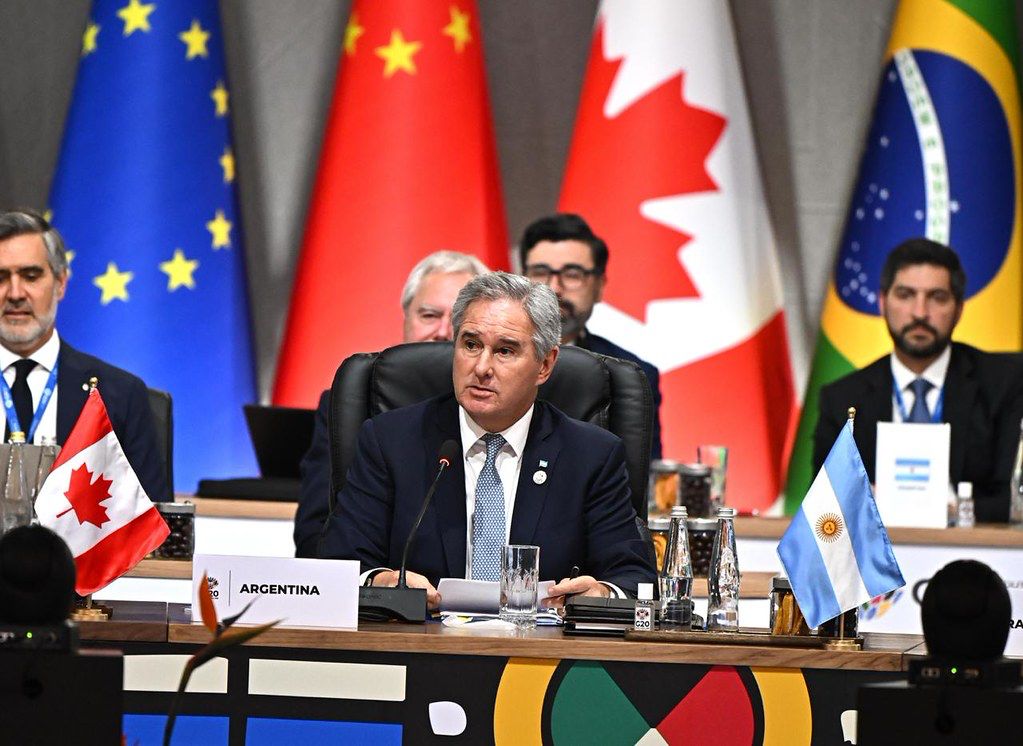
📌 Arguments of the Foreign Ministry
- Complexity of the conflict in the Middle East: Quirno pointed out that the text "simplifies a problem that requires a broader and more balanced approach."
- Defense of the principle of consensus: The Argentine Foreign Ministry denounced a "break with the historical rules of the forum," by approving a document without the endorsement of all members.
- Alignment with the United States: Argentina's position was in tune with Washington, which also questioned the geopolitical focus of the text.
🔎 Political implications
- An unprecedented event: It is the first time that the G20 summit does not conclude with a communiqué agreed upon by all countries.
- Diplomatic repercussions: The decision generated discomfort in South Africa and raised questions about Argentina's role in future multilateral forums.
- New international positioning: Milei's government seeks to strengthen its closeness to the U.S. and distance itself from positions it considers partial in global conflicts.
 🚆 Argentina invests US$300 million in 43 new trains for the AMBA
- 20/11/2025 » 16:45 by cronywell
🚆 Argentina invests US$300 million in 43 new trains for the AMBA
- 20/11/2025 » 16:45 by cronywell
🚆 Argentina invests US$300 million in 43 new trains for the AMBA
The Argentine government announced the purchase of 43 modern trains, with an investment of close to US$300 million (€260 million), within the framework of the Modernization Plan of the Metropolitan Railway System.
💡 A strategic investment for public transport
The measure is part of the Railway Emergency, which seeks to renew and expand the fleet of services in the Metropolitan Area of Buenos Aires (AMBA).
📊 Details of the operation
- 🚉 150 passenger cars will be part of the new formations.
- 🔧 The provision of supplies, consumables and spare parts for three years of maintenance is included.
- 📑 The contracting will be carried out by Trenes Argentinos Operaciones, through abbreviated certification and direct contracting.
🛤️ Benefited lines
The trains will be destined for the following lines:
- Rock
- Mitre
- Saint Martin
- Vine shoot
- Belgrano Sur
👉 It is estimated that 1.3 million daily passengers will benefit from the incorporation of these units.
📜 Historical context
- Since 2015, trains have not been acquired for metropolitan services.
- Much of the current fleet is over 50 years old, with reliability and comfort issues.
🚀 Expected impact
With this investment, the Government seeks to:
- ✅ Modernize rail transport, improving safety and efficiency.
- ✅ Reduce travel times and increase the frequency of services.
- ✅ Promote sustainable mobility, decongesting other means of transport.
🗣️ Official statements
Sources from the Ministry of Transport pointed out that the purchase represents:
"A fundamental step to recover the Argentine railway system and guarantee a decent service for millions of users."
🔎 In summary
The acquisition of these 43 new trains constitutes one of the most relevant investments in railway infrastructure in the last decade, aimed at revitalising a key service for urban mobility and social integration in the AMBA.