







News
 Heavy defeat of La Libertad Avanza in Buenos Aires
- 10/09/2025 » 13:58 by cronywell
Heavy defeat of La Libertad Avanza in Buenos Aires
- 10/09/2025 » 13:58 by cronywell
Heavy defeat of La Libertad Avanza in Buenos Aires: "political disaster" that shakes Milei's economic plan
On an election day marked by high citizen participation and a climate of political tension, La Libertad Avanza suffered a resounding defeat in the province of Buenos Aires, generating a real "political disaster" that puts the economic course of President Javier Milei in check.
The big winner of the day was Fuerza Patria, which achieved a majority in the Buenos Aires Senate and consolidated itself as the first minority in the Chamber of Deputies, displacing the libertarian ruling party and reconfiguring the provincial legislative map.
Governor Axel Kicillof, the main reference of the triumphant space, celebrated the result with a fiery speech from La Plata. "This people does not allow itself to be deceived by empty promises or by adjustments that punish those who have less. Today Buenos Aires spoke clearly: we want a productive, inclusive and sovereign model," he said, in a clear allusion to the policies of the national government.
The electoral setback represents a hard blow for Milei, who had bet heavily on consolidating his base in the country's most populous province. Political analysts warn that the loss of territorial power could make it difficult to implement key reforms, especially in fiscal and privatization matters.
From the presidential entourage, there have not yet been official statements, although close sources acknowledge that "the result forces a recalibration of the strategy."
The day showed the growing wear and tear of the ruling party and the strengthening of the opposition forces, in a context of persistent inflation, social conflict and questioning of the libertarian economic model.
 The crisis that shakes Milei's government
- 26/08/2025 » 12:25 by cronywell
The crisis that shakes Milei's government
- 26/08/2025 » 12:25 by cronywell
Scandal over alleged bribes in disability: the crisis that shakes Milei's government
A serious corruption scandal shakes the government of Javier Milei after the leak of audios that reveal alleged millionaire bribes in the National Agency for Disability (ANDIS), which triggered the intervention of the agency and multiple judicial investigations.
The audios that uncovered the scandal
The crisis was unleashed a week ago when recordings were leaked in which Diego Spagnuolo, then director of ANDIS, denounced the payment of bribes by high-ranking officials in the purchase of medicines. In the audios, Spagnuolo claimed that bribes of five hundred thousand dollars per month related to pharmaceutical contracts were collected.
The revelation generated an immediate political crisis, forcing the government to take drastic measures to contain the shockwave of the scandal that already transcends Argentina's borders.
Removal and Government Actions
Given the seriousness of the accusations, President Javier Milei immediately requested the removal of Diego Spagnuolo from his position as Director of ANDIS. The decision was made just days after the compromising audios were released.
The government also announced the intervention of the National Agency for Disability and ordered a summary investigation of all the agency's contracts. However, the authorities did not comment on the veracity of the complaints made by the removed official himself.
Links with key government figures
The scandal splashes figures in the circle close to power, including references to a company linked to Martín Menem, president of the Chamber of Deputies. The audios also mention alleged connections that could involve Karina Milei, the president's sister and an influential figure in the government.
Extent of research
The plot of alleged bribes has extended beyond ANDIS. Recently, it was demanded to investigate Luis Petri, Minister of Defense, for a contract of 50,000 million pesos between the Institute of Social Work of the Armed Forces and the Suizo Argentina laboratory, a company pointed out in the bribery scandal.
Opposition reactions
The political opposition was quick to react, demanding explanations and transparency. Senator Leandro Santoro was one of the first to speak out, noting that "audios circulate where it is stated that the Argentine administration received bribes of five hundred thousand dollars each month" precisely when essential issues for people with disabilities are discussed.
International impact
The scandal has transcended national borders, being described by international media as a "Mani pulite a la Argentina" in reference to the famous Italian anti-corruption operation of the 90s. The world's leading media have set their eyes on this crisis that directly affects one of the most vulnerable sectors of society.
Problematic history
This scandal adds to previous controversies in the government's disability policy. In January 2025, ANDIS had generated repudiation by issuing a resolution that classified people with intellectual disabilities with discriminatory terms such as "idiot", "imbecile" or "profoundly mentally weak", which had already generated social and political unrest.
Current state of the investigation
A judicial case is currently underway that seeks to clarify the alleged bribery network. The investigation focuses on the contracts for the purchase of medicines and the possible existence of a circuit of illegal payments that would have operated for months in the agency in charge of caring for people with disabilities.
The case continues to unfold as the government faces one of its most serious crises since the beginning of Milei's administration, calling into question the transparency in the management of resources destined for one of the most sensitive sectors of Argentine social policy.
 Drop in sales for Children's Day 2025 in Argentina.
- 18/08/2025 » 18:28 by cronywell
Drop in sales for Children's Day 2025 in Argentina.
- 18/08/2025 » 18:28 by cronywell
🧸 Drop in sales for Children's Day 2025 in Argentina.
This year, Children's Day once again highlighted the difficulties of consumption in Argentina. Despite the fact that more than 87% of businesses applied promotions and financing plans, SME retail sales fell by 0.3% compared to the previous year, according to data from the Argentine Confederation of Medium-sized Enterprises (CAME).
📉 Main findings
- The average ticket was $33,736, just above that of 2024, but with a real drop of 21.1% when discounting inflation.
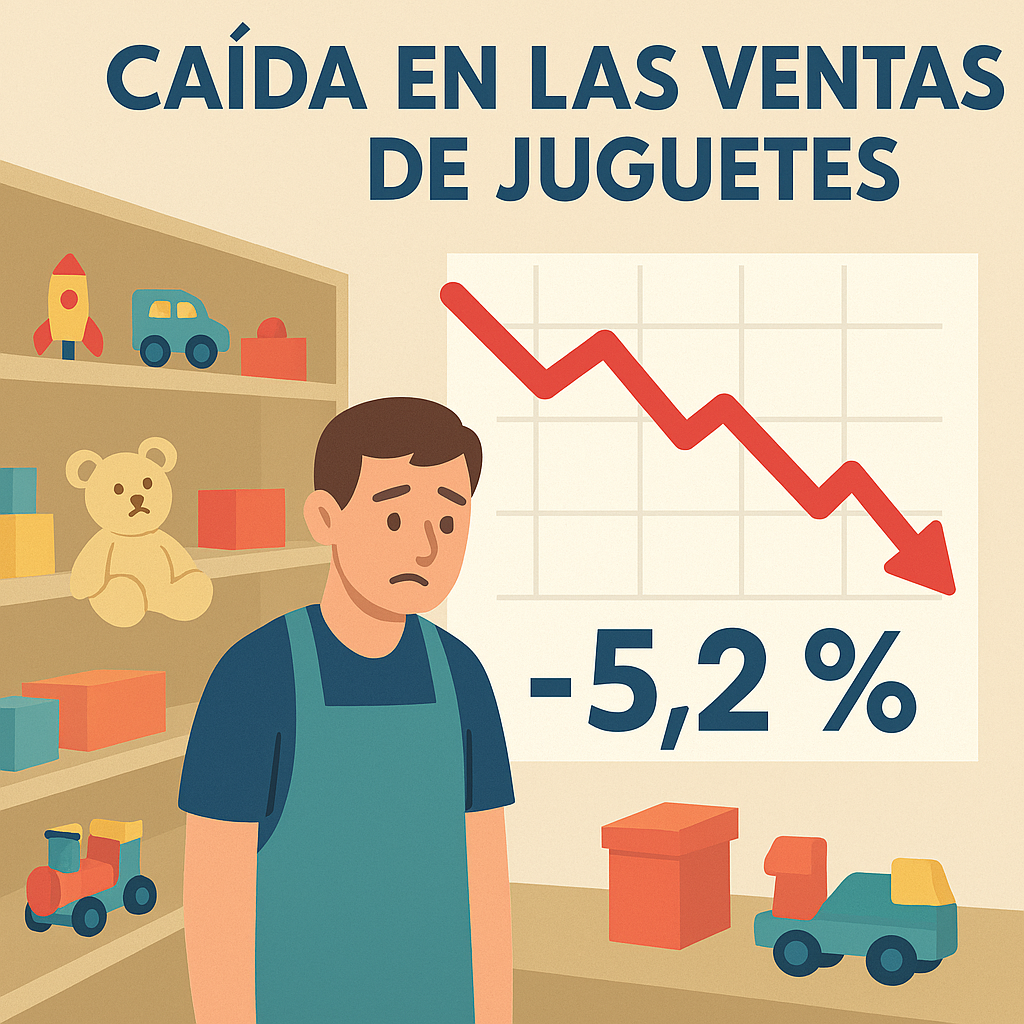
- In the toy sector, the Argentine Chamber of the Toy Industry (CAIJ) reported a 5.2% drop in sales.
- Purchases of cheaper gifts, such as board games, books and stuffed animals, predominated, rather than electronics or seasonal products.
🧾 Factors that explain the fall
- Adverse weather conditions and the holiday on Friday the 15th affected the flow of customers.
- High interest rates reduced the use of bank promotions, which accounted for only 70% of operations (historically they were 90%).
- Many businesses used the date as an opportunity to liquidate old stock, rather than as a real driver of consumption.
📍 Regional impact
In cities such as Comodoro Rivadavia, the drop was more pronounced: up to 12% compared to 2023. Local merchants warned about business closures and difficulties in sustaining the payment chain.
The date, historically key for trade, failed to reverse the trend of stagnation. Consumption continues to be conditioned by the loss of purchasing power and the caution of families.
 Argentina achieves favorable ruling in YPF case
- 15/08/2025 » 18:11 by cronywell
Argentina achieves favorable ruling in YPF case
- 15/08/2025 » 18:11 by cronywell
Argentina achieves favorable ruling in YPF case: order to deliver 51% of shares suspended
The New York Court of Appeals granted a stay that allows the country to appeal without transferring its assets in the state oil company
Argentina obtained a favorable decision from the U.S. Court of Appeals for the Second Circuit in the YPF case, which suspends the court order that forced the country to hand over 51% of the shares of the state oil company as part of the payment for the nationalization carried out in 2012.
The U.S. court "accepted Argentina's request, so the June 30, 2025 order is suspended" while the appeal filed by the Argentine government is resolved. This decision represents a significant relief for national authorities, who had warned about the practical impossibility of complying with an adverse ruling.
Context of the dispute
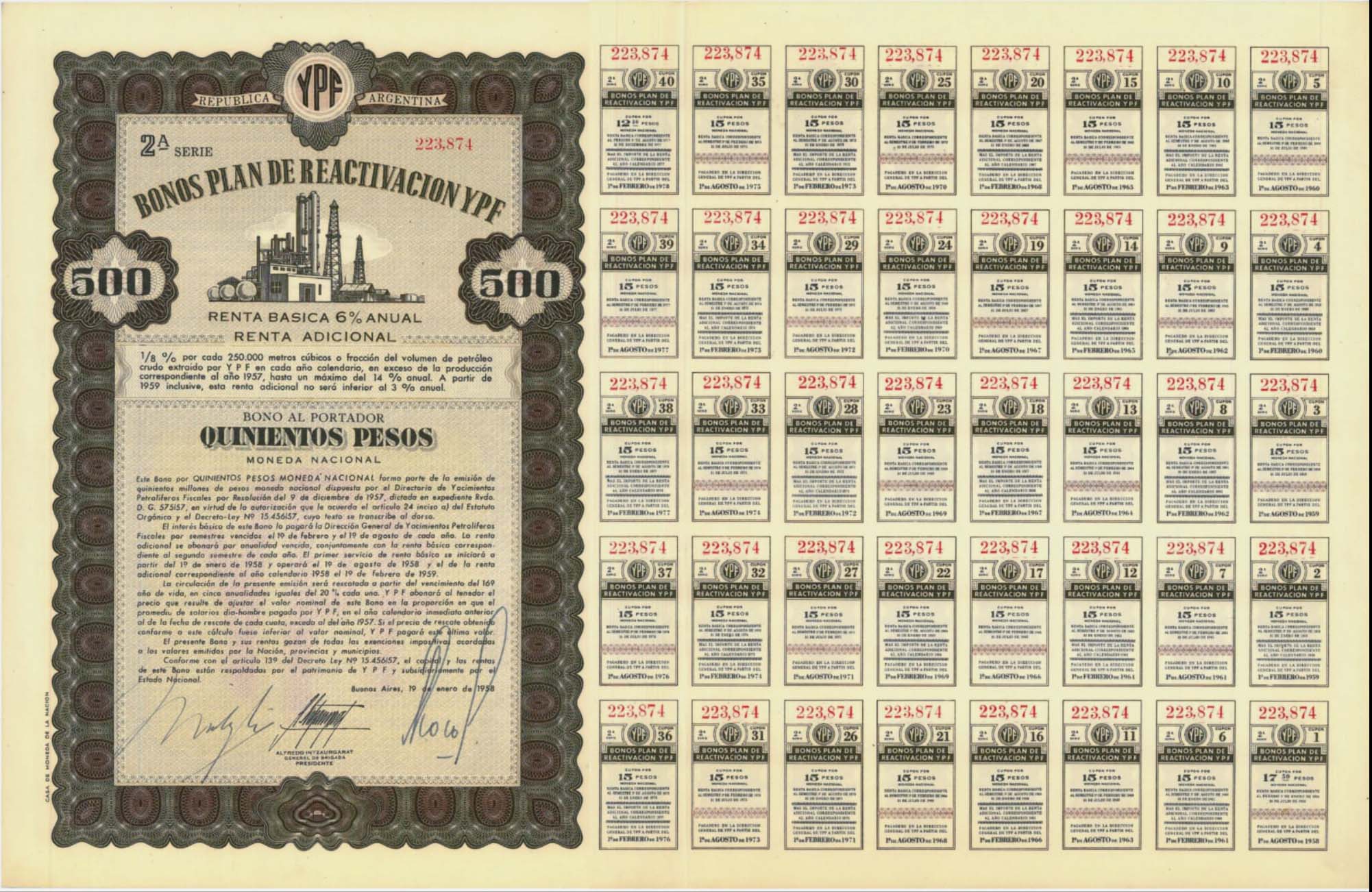
The case originates in the nationalization of YPF carried out on April 16, 2012 during the government of Cristina Fernández de Kirchner, when the Argentine State expropriated 51% of the shares that belonged to the Spanish Repsol. In September 2023, Judge Loretta Preska ordered the government to pay US$ 16.1 billion for the nationalization of YPF: US$ 14.4 billion corresponding to the Petersen Group and US$ 1.7 billion to Eton Park.
Given Argentina's inability to meet the monetary payment, the magistrate had ordered last June that the country transfer 51% of its shares in YPF to a global custody account at the Bank of New York Mellon as a way to guarantee compliance with the ruling.
Position of the Argentine government
The chief of staff, Guillermo Francos, had warned days ago that "An adverse ruling is unfulfillable," marking the government's firm position regarding the impossibility of complying with an order that would imply the loss of control of the country's main energy company.
The Ministry of Economy immediately celebrated the decision of the appeals court, which also accepted that the United States government participate as "amicus curiae" supporting the Argentine position in the judicial process.
Implications of the ruling
The suspension granted by the Court of Appeals allows "The government's shares in the oil company to remain in the Caja de Valores while the Court resolves the appeal," according to analyst Sebastián Maril of Latam Advisors.
This decision prevents, for the time being, Argentina from losing control of YPF, a strategic company for the country's energy sovereignty and key in the development of unconventional resources in Vaca Muerta.
The judicial process will continue in the appeal instances, where Argentina will seek to reverse the millionaire sentence imposed in the first instance. Meanwhile, the country maintains full control of the state oil company, whose shares will remain in Argentine custody during the appeal process.
The decision marks an important respite for the Argentine government in one of the most complex international disputes facing the country, with direct implications for one of its most valuable energy assets.