







News
 Domingo Cavallo anticipated the future of the dollar in 2025 and what will happen after the exit from the clamps
- 06/01/2025 » 14:13 by cronywell
Domingo Cavallo anticipated the future of the dollar in 2025 and what will happen after the exit from the clamps
- 06/01/2025 » 14:13 by cronywell
Domingo Cavallo anticipated the future of the dollar in 2025 and what will happen after the exit from the clamps
In his personal blog, the former Minister of Economy assured that the exit from the clamp will imply a jump in the dollar, but "it does not have to be inflationary"
In his personal blog, the former Minister of Economy said that its elimination could consolidate monetary and exchange rate stability in Argentina
Former Economy Minister Domingo Cavallo once again analyzed the situation of the dollar in Argentina and anticipated a possible exchange rate jump in 2025.
His statements, published on his blog in an article entitled "Getting out of the stocks does not have to be inflationary", generated a stir in the economic and political sphere.

Leaving the Stocks does not have to be inflationary
The government has been winning the battle against inflation. The challenge is to win the war. The government's success in the fight against inflation has its fundamental origin in fiscal adjustment and the elimination of monetary issuance that was due to the fiscal deficit, but control of the exchange rate and the reduction of the gap also played and will continue to play a fundamental role. Both the president and the economy minister suggest that the pace of the crawl can be reduced to 1% per month and finally to 0%, that is, converge to a fixed exchange rate that would lead to the total elimination of what they call inflation induced by the exchange rate adjustment.
Those who bet on the final success of this stabilization strategy and rule out a future devaluation jump are confident that in the medium term the increase in hydrocarbon and mining exports, as well as the productive results of the investments induced by the RIGI will make the exchange rate at the end of the stabilization process sustainable and will not need additional adjustments and that, as a bridge to reach this situation, there will be the eventual resources provided by the IMF in a future program and eventual access to the capital market when the country risk rate pierces the barrier of 400 basis points.
I argued in January 2024, as soon as the initial measures of President Milei's government were announced, that 'to eliminate inflation, the most important thing will be to avoid a new jump in the price of the dollar before it is in a position to fully unify and liberalize the foreign exchange market'. The government is cautious about the possibility of eliminating the clamp precisely for fear of an exchange rate jump and its impact on inflation.
In this post I argue that when the complete elimination of the clamp is decided, there will surely be a jump in the exchange rate, but this does not mean that the disinflation process will be interrupted but, on the contrary, it may mean the consolidation of monetary and exchange rate stability.
As a counterweight to a possible exchange rate jump, the complete elimination of the clamp would lead to a greater reduction in country risk, facilitating access to financing to face the principal maturities of the debt in dollars. At the same time, it will help to ensure that there are favorable balances in the trade balance to facilitate the Treasury's access to buy, with the pesos of its primary fiscal surplus, the dollars it needs to meet the payment of the interest on that debt.
The government, instead of postponing the elimination of the clamp until after the elections, in my opinion should seriously consider its elimination in the first months of next year, to reach the election with the economy stabilized and reactivated and in a clear process of growth through investment and increased productivity.
What is the role of the exchange clamp in the disinflation process?
The so-called exchange clamp is made up of many restrictions on the legal purchase and sale of foreign currencies (for simplicity we are going to refer to one currency, the dollar). The restrictions of the traditional exchange control, which have been applied in many economies at different stages of their economic history, are: a) those that oblige exporters to sell to the Central Bank, within maximum periods defined by the regulations, the dollars that these operations generate and b) those that limit importers' access to the dollars that they must disburse, both in quantity and in the minimum payment deferral period Theoretically, these controls allow the Central Bank to determine the exchange rate (fix or adjust it at will) and, with certain limitations, achieve quantitative targets for the accumulation of reserves. In essence, it is about the control of price and quantity in the foreign exchange market, something that is not easy to maintain for long periods of time without generating evasion mechanisms that feed a parallel market, black, blue or whatever you want to call it.
As a palliative, in order to also control the gap between the parallel market and the exchange rate managed by the Central Bank, operations for the purchase and sale of financial dollars are allowed, but they are also subject to interventions and regulation by the Central Bank that restrict their operation and affect their price. Those who can open an account in dollars within the Argentine financial system and have the necessary pesos to pay them, can buy the stock exchange dollar (MEP) which, except for cash withdrawal, for payments abroad are subject to all exchange control restrictions. Cash settlement operations (CCL) in the bond market allow payments and collections abroad. But those who, due to their export and import activities, or even financial operations, need access to the official exchange market managed by the Central Bank are not allowed to operate in the CCL.
In short, all these restrictions and exchange controls allow the government to manage the exchange rate and the gap with pseudo-free markets. This leads Central Bank officials and, for the moment, most private sector financial operators, to believe that a devaluation jump can be avoided, even if the private sector operating in the real economy complains about the so-called "exchange rate delay" and the increase in costs in dollars.
The dynamics of inflation
The inflation rate published by INDEC for the month of October was 2.7%, a significant drop in relation to the 3.5% of the month of September and just over the 4% average for the months of May to August, but the early data for the month of November anticipate that the monthly inflation rate will probably return to above 3% per month. This can be seen in Table 1, which compares the rates published by INDEC and the trend marked by the data prepared by Alberto Cavallo based on online observations.
The average rate of online prices, which was 2.2% in October, is climbing to 2.9% in November. If the same increase were to occur for the inflation rate measured by INDEC, it would have to increase from 2.7% in October to 3.4% in November. Some indications from the last days of November (for example, the increase in the price of meat), anticipate that there will also be a trend of increase in December.

This persistence of the inflation rate in the range of 3 to 4% per month should not be surprising when the monetary aggregates M2 and bank credit to the private sector have been increasing at rates of 7% and 14% per month respectively since May.
For the moment, the future dollar market seems to validate expectations that the government will succeed in controlling the exchange rate during 2025 with the crawl at the pace it has been announcing. The reduction of the gap between the CCL and the exchange rate set by the Central Bank helps to consolidate this expectation. The key to success is to prevent financial operators from beginning to anticipate a post-election exchange rate jump. To do this, contrary to what some believe, it is important to eliminate the clamp as soon as possible. The sooner the clamp is eliminated, the better the monetary system will work with currency competition because the dollar will be able to fulfill not only the role of currency for commercial transactions but also as a vehicle for savings to finance the investment of all types of companies. In particular, those that cannot benefit from the RIGI regime.
Arguments that feed the expectation of an exchange rate jump at the time of market unification and liberalization
It is likely that by eliminating the clamps, the exchange rate will increase. In addition to the argument about the appreciation of the peso in the official market (exchange rate delay), which can be aggravated by the devaluation of the Brazilian real and the strengthening of the dollar due to measures adopted by the Trump administration, there are other arguments to predict an exchange rate jump at the time of market unification and liberalization. The main argument is that the gap between the price in the MEP and CCL markets and the price set by the Central Bank is not realistic, because the regulations do not allow dividends and royalties to be remitted to companies that must necessarily operate in the MULC and the access of individuals and companies to the MEP is also severely restricted. It is argued that the unification of the foreign exchange market should be done while maintaining restrictions on the remittance of dividends and payment of royalties, but if this happens, capital inflows will be discouraged.
Exchange rate stability after reunification can only be maintained if the supervening exchange rate stabilizes without the Central Bank selling reserves. On the contrary, stability will be consolidated if the Central Bank accumulates reserves without causing additional depreciation of the peso. For this to happen, capital inflows need to be encouraged. If capital inflows are vigorous, the Central Bank will be able to buy reserves and allow the appreciation of the peso that will automatically reverse any increase in the inflation rate that follows an exchange rate jump. This is the typical phenomenon of stabilization plans with free movement of capital.
That there is no restriction on the purchase and sale of foreign currencies is an essential requirement for the economy to function with competition from Peruvian-style currencies. This is the monetary system that President Milei has been talking about. On the other hand, if exchange rate stability is achieved with competition from Peruvian-style currencies, the economy will be able to function with less rigidity than with complete dollarization or convertibility with a fixed exchange rate.
How would the exchange and monetary system of currency competition (Peruvian-style) work?
Banks will receive deposits in all types of accounts in both pesos and dollars and the Central Bank will control the expansion of bank credit in each of the two currencies with the same instruments: mandatory legal reserve requirements (which may be different) and open market operations with bonds in pesos and dollars to regulate the interest rate in the two currencies.
The stability of prices in the economy will require that the peso does not tend to depreciate, even if it suffers transitory fluctuations. When external shocks demand depreciation of the peso, the Central Bank may limit that depreciation not only by selling reserves but also by increasing the legal reserve requirement for deposits in pesos, decreasing the reserve requirement for deposits in dollars, and conducting open market operations that increase interest rates in pesos and lower rates in dollars.
The management of reserve requirements and open market operations will allow the sale of reserves necessary to stabilize the peso to be limited. When external shocks lead to the appreciation of the peso, the Central Bank will be able to take advantage of it to increase its level of reserves. It will also be able to handle reserve requirements and open market operations in the opposite direction to the aforementioned to curb the depreciation of the peso.
 Are we in a bad way, but are we doing well?
- 03/01/2025 » 10:26 by cronywell
Are we in a bad way, but are we doing well?
- 03/01/2025 » 10:26 by cronywell
Are we in a bad way, but are we doing well?
The long list of companies that closed, suspended operations or laid off in the last year
Fresenius Medical Care, Xerox, Clorox, Prudential, Procter & Gamble, Nutrien, ENAP and HSBC, Dánica, Chango Más, Diarco, Copetín Gonzalo, Granja Tres Arroyos, AVON, NRG Argentina, Fabrisur, Whirlpool, Textilcom, AlpaCladd, General Motors, Acindar, Bridgestone, among many others.
More than 2,300 companies closed their doors, while others reduced their production or implemented mass layoffs. From multinationals to SMEs, the impact of the recession affects thousands of workers.
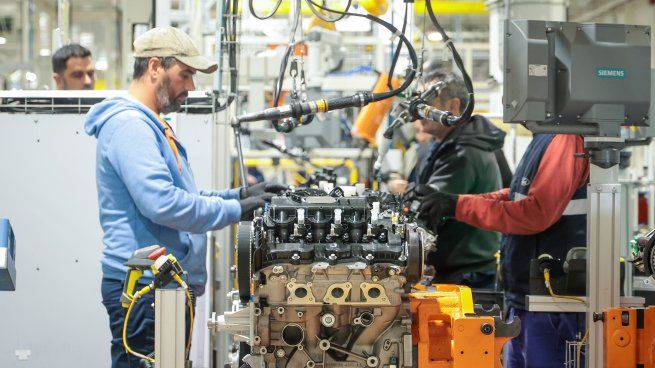
The industry suffered a sharp decline this year and that was evidenced in company closures and mass layoffs.
In the last year, Argentina experienced a notable outflow of multinational companies and a series of closures, production suspensions and layoffs in various industries, reflecting the complex economic situation that the country is going through.
The data are conclusive, according to a report by the Confederation of Industrial Unions of the Argentine Republic (Csira), between November 2023 and August 2024, 38,532 jobs were lost in the industry. If the construction and mining sectors are included, the figure rises to 126,050 jobs lost.
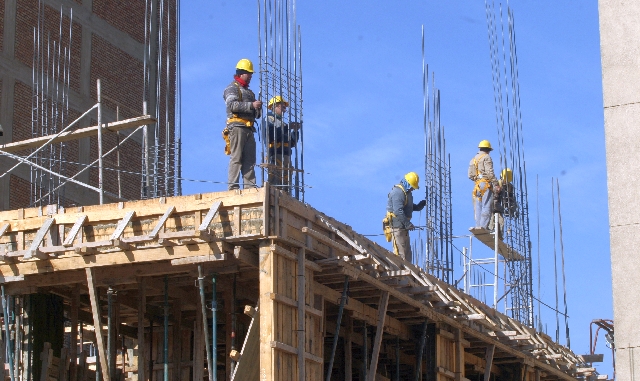
In addition, in the same period, 879 companies closed in the manufacturing industry, and 2,333 if mining and construction are also considered. The situation has led 86.6% of the unions surveyed to consider that activity has worsened since Javier Milei came to power, reflecting a climate of growing concern in the workplace.
The labor outlook was also strongly affected, with 60% of industrial unions reporting layoffs in the last quarter and a third of them pointing to difficulties on the part of companies to pay wages. In addition, 82% of the unions surveyed indicated cuts in overtime, and 72% mentioned suspensions, leaves and early vacations for a percentage of workers.
In this context, in the last year, at least eight multinationals stopped operating in Argentina, including HSBC, Xerox, Clorox, Prudential, Nutrien, ENAP, Fresenius Medical Care and Procter & Gamble.
The truth is that the crisis reached all industries equally and many companies chose to stop their production and/or execute layoffs to stay afloat.
An emblematic case was that of Acindar, the steel company, a subsidiary of ArcelorMitta, suspended production at all its plants for a month in March 2024, due to an abrupt drop in demand. Subsequently, in June 2024, it announced a three-week suspension at its plant in Villa Constitución, Santa Fe, and a reduction of its annual production from 1.2 million tons in 2023 to 600,000 tons in 2024.
More recently, the company announced an "untimely" advance of the stops they had scheduled for the end of the year, "due to the sharp drop in sales," according to the union. This stoppage of activities affects more than 700 workers.
In the same vein, Ferrum, the leading company in the manufacture of toilets, paralyzed its plants and carried out layoffs and suspensions of workers in the first half of 2024, in response to the decrease in activity in the construction sector.
Meanwhile, Textilcom and AlpaCladd, textile companies, which produce for brands such as Cheeky, Mimo, Yagmour and Penguin, laid off 300 workers in May in the provinces of Catamarca and La Rioja, due to falling demand and financial difficulties.
The fall in consumption also affects the appliances or white goods sector, which in turn is being unprotected by the reduction of tariffs on the import of refrigerators and washing machines. This led to layoffs at Whirlpool and Briket, among others. In the first, there were 60 layoffs in the company due to production reduction at its plant in the Pilar Industrial Park, in the province of Buenos Aires, in May of this year. In Briket, located in the south of Rosario, the company – which produces refrigerators, displays and freezers – has laid off 300 workers so far this year.

The list goes on and just to mention two cases, General Motors, made 33 layoffs and agreed to 167 voluntary retirements, within the framework of a reduction in production projection. For its part, Bridgestone, the tire company located in Lomas de Zamora, Buenos Aires province, laid off 35 workers in February 2024, citing a drop in demand.
In the retail segment, the ChangoMás supermarket chain laid off around 200 employees in the province of Buenos Aires in May of this year, as part of an operational restructuring.
Later in time, the firm Dánica announced the closure of its plant located in the town of Lavallol, province of Buenos Aires. The decision, taken by the Beltrán Group, owner of the company since 2018, is part of the company's decrease in demand and economic problems. The measure would leave 150 workers unemployed.
Another historic company that this year declared bankruptcy and fired all its workers is the Mendoza-based Copetín Gonzalo, the firm with 30 years of experience closed its doors definitively in the Milei era.
Also in the food sector, companies such as Granja Tres Arroyos, Bimbo and Pepsico, among many others, this year advanced with dozens of layoffs in their different production plants. In all cases, the fall in demand and the high costs of production and labor were the main causes of the decision.
The reality is that job losses and business closures not only affect the workers directly involved, but also local economies and the value chains of various industries. In this context, for the time being, the projections of job creation for 2025 do not seem to be very encouraging.
 Profound economic and social deterioration in a very short time
- 14/12/2024 » 08:34 by cronywell
Profound economic and social deterioration in a very short time
- 14/12/2024 » 08:34 by cronywell
González Olguín: "There was a profound economic and social deterioration in a very short time"
The economist and professor at the National University of Córdoba analyzed the results of the economic policy applied by Milei's government one year into his administration.
Economist Eduardo González Olguín said that the government of Javier Milei caused "a deep economic and social deterioration" in just one year.
"I think that with all objectivity it can be affirmed that Milei's economic policy has caused in a very short time a profound economic and social deterioration in Argentina. That can be synthesized in some indicators," said the professor of the National University of Córdoba (UNC), about the result of the economic policy applied in the last 12 months.
Among the most alarming data, González Olguín highlighted "a 3.8% drop in the Gross Domestic Product (GDP) compared to the previous year, according to the International Monetary Fund";the loss of 16% in real wages";the elimination of 261 thousand registered jobs, not counting the informal jobs affected"; "the increase in unemployment that went from 5.7% to 7.6%" or "the closure of 16 thousand SMEs and a drop in sales of small and medium-sized companies of 13.2%".
In addition, he stated that the purchasing power of workers and retirees also fell. "Pensions, which in November 2023 covered half of the basic basket of the elderly, today only reach a third."

On the other hand, he commented that "poverty went from 41.7% at the end of last year to 55% in the second half of this year, while indigence increased from 11.9% to 15.8%."
He also mentioned that meat consumption reached the lowest level in 26 years and that investment suffered the largest drop since 2004, with a decline of 35%, only comparable to the most critical years of the pandemic. For González Olguín, these figures show "a strong retraction of demand".
 Brazil's central bank raises benchmark interest rate to 12.25 pct
- 12/12/2024 » 12:44 by cronywell
Brazil's central bank raises benchmark interest rate to 12.25 pct
- 12/12/2024 » 12:44 by cronywell
Brazil's central bank raises benchmark interest rate to 12.25 pct
BRASILIA, -- The Monetary Policy Committee (Copom) of Brazil's central bank decided on Wednesday to increase the benchmark Selic interest rate from 11.25 percent to 12.25 percent, the second-highest since November 2023, when it stood at 12.75 percent.
In response to an adverse economic scenario complicating the convergence of inflation toward the target, additional adjustments of the same magnitude are expected in the next two meetings, potentially raising the Selic rate to 14.25 percent annually, according to Copom's statement.
"The total magnitude of the monetary tightening cycle will be determined by the firm commitment to inflation convergence toward the target and will depend on the evolution of inflation dynamics, particularly the components most sensitive to economic activity and monetary policy," the statement said.
The interest rate increase aims to curb inflationary pressures, as the Consumer Price Index may exceed the upper limit of the official target range, set at 3 percent with a tolerance of 1.5 percentage points. Analysts project inflation at 4.84 percent for this year.
This decision marks the largest Selic rate hike under the administration of Luiz Inacio Lula da Silva and the most significant increase since February 2022, when a 1.5-percentage-point hike was implemented. All nine Copom members voted unanimously for the adjustment.
Wednesday's meeting was the last led by Roberto Campos Neto, who will step down as central bank president in January 2025. He will be succeeded by Gabriel Galipolo, the current director of monetary policy at the Central Bank, who was appointed by Lula and approved by the Senate in October.
