







News
 TENSE DAY FOR THE REFORM OF THE GLACIER LAW
- 08/04/2026 » 15:38 by cronywell
TENSE DAY FOR THE REFORM OF THE GLACIER LAW
- 08/04/2026 » 15:38 by cronywell
🌊 TENSE DAY FOR THE REFORM OF THE GLACIER LAW: THE RULING PARTY IMPOSES ITS NUMBER AMID PROTESTS AND A BESIEGED CONGRESS
The bill that modifies Law 26,639 is approved in the Chamber of Deputies with the support of mining provinces, while environmentalists and scientists warn of a "historic setback" in the protection of water resources.
📊 Reading time: 6 minutes
🏷️ Keywords: Glacier Law • Mining Reform • Javier Milei • Deputies • Environment Argentina
🧊 THE BACKGROUND OF THE CONFLICT: WHAT IS THE REFORM ABOUT?
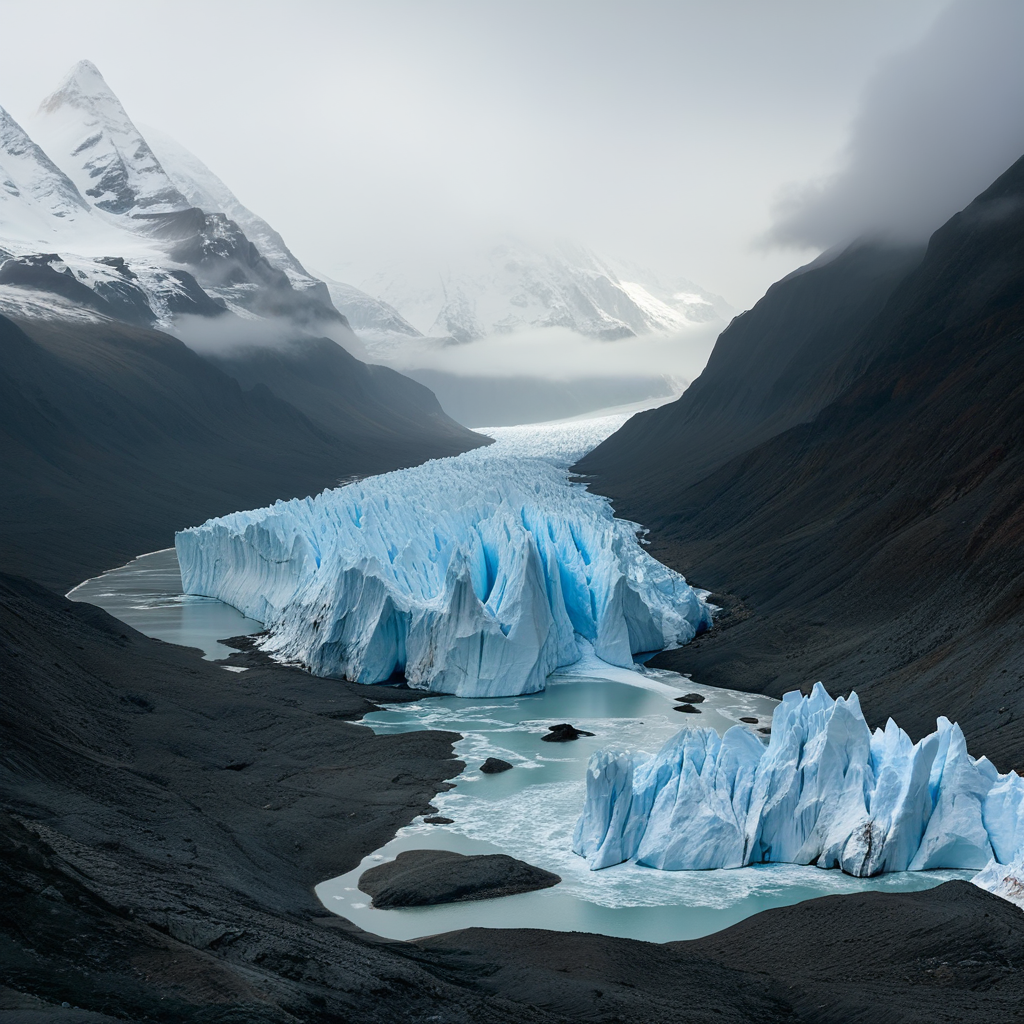
Glacier Law 26,639, passed in 2010, was a pioneer worldwide in establishing that glaciers and the periglacial environment – areas of frozen soils that surround eternal ice – are "public goods" and "strategic water reserves". Argentina has approximately 17,000 ice bodies, essential for the water regulation of basins that supply millions of people in arid and semi-arid regions.
The reform promoted by the Executive and approved today modifies the heart of that protection. The new articles establish that only those glaciers and periglacial geoforms that fulfill an "effective and relevant water function" for the recharge of basins or human consumption will enjoy protection. In practice, this means that vast areas hitherto untouchable could be enabled for mining or hydrocarbon exploration and exploitation.
"The project distorts the spirit of the law and is not based on the latest advances in scientific knowledge about glaciers"
— Scientists from CONICET and the National University of Córdoba, in a letter sent to legislators
🗳️ THE NUMBERS OF POWER: HOW THE MAJORITY WAS BUILT
Today was the outcome of a legislative strategy that the ruling party has been weaving since February, when the Senate gave half sanction to the project with 40 votes in favor, 31 against and one abstention.
This afternoon, in the Chamber of Deputies, La Libertad Avanza consolidated a coalition that exceeded 130 votes, reaching – according to parliamentary sources – up to 140 votes. The arch of supports included:
- ✅ The PRO
- ✅ The Radical Civic Union (UCR)
- ✅ Federal Innovation
- ✅ A sector of Unión por la Patria (especially legislators from mining provinces such as San Juan, Catamarca and Mendoza)
- ✅ Provincial parties
The opposition bloc of Union for the Homeland, United Provinces and the Civic Coalition signed rejection opinions, warning that the measure violates the minimum environmental budgets established in Article 41 of the National Constitution.
📍 The Provincial Vote: Fracture of Peronism
A key factor was the pressure of the Andean governors. Governors such as Marcelo Orrego (San Juan), Raúl Jalil (Catamarca), Gustavo Sáenz (Salta) and Alfredo Cornejo (Mendoza) defended the reform as necessary to attract mining investments for billions of dollars in copper and lithium, under the RIGI (Incentive Regime for Large Investments).
"At no time did a governor propose modifying the glacier law and changing quality standards. It is not true that mining goes against the environment"
— Marcelo Orrego, governor of San Juan, during the plenary session of commissions
This position generated an internal fracture in Peronism: while the national leadership of Union for the Homeland rejected the project, deputies from San Juan and Catamarca voted in favor.
📢 THE STREET BURNS: PROTESTS, ESCALATIONS AND VIGILS
While the deputies deliberated, the Congress was transformed into an armored fortress.
⏰ 6:30 AM | Greenpeace scales the Monument to the Two Congresses
Greenpeace activists staged the first high-impact action of the day. Shortly after 6:30 a.m., two militants climbed the Monument to the Two Congresses and unfurled two giant banners that read from the avenue: "Deputies: do not betray the Argentines" and "The Glacier Law is not touched."
Nine people were delayed by the City Police, and firefighters from the Special Rescue Group intervened to lower the demonstrators who remained at height. All of them regained their freedom hours later, but with contraventional acts.
⏰ 13:00 HS | Rally of the Left Front
From noon, columns of the FIT (Left Front) began to arrive in the area of Avenida de Mayo and 9 de Julio. The slogan was clear: "No to the looting of the glaciers." Former deputy Juan Carlos Giordano denounced that "the government of Javier Milei intends to hand over the glaciers to the mining companies for 30 years."
⏰ 5:00 p.m. | Mass march and vigil until the vote
The call was extended to social organizations, environmentalists and unions. A crowd filled the Plaza del Congreso, where an artistic festival was held with musicians committed to the cause. The demonstrators announced that they would remain in place until the result of the vote was known.
⚖️ THE TECHNICAL KEYS: WHAT EXACTLY CHANGES?
|
Appearance |
Current Law (2010) |
Reform approved |
|
Glacier protection |
Absolute over every ice body |
It is maintained, but with the possibility of disaffiliation if it does not fulfill "water function" |
|
Periglacial environment |
Protected as a strategic water reserve |
Protection only if reliable water function is demonstrated |
|
National Inventory |
Binding for mining activity |
The provinces can review it and request modifications |
|
Powers |
Nation sets minimum budgets |
Provinces define which areas to protect according to their own criteria |
|
Mining activities |
Prohibited in protected areas |
Allowed in periglacial areas with no proven water function |
Source: Authors' elaboration based on the text of the project and journalistic coverage
🌎 THE ECONOMIC CONTEXT: MINING AS A WAY OUT
The government of Javier Milei is promoting this reform as part of a broader strategy to deregulate the economy and attract foreign investment. The mining sector sees the modification as an opportunity to develop copper megaprojects – such as El Pachón (US$ 9,500 million) and Agua Rica (US$ 4,000 million) – which today remain paralyzed by legal uncertainty.
In addition, in February 2026, Argentina and the United States signed an agreement to strengthen critical mineral supply chains, reinforcing the country's attractiveness to international capital.
"With this law there will be more lawsuits. The Supreme Court has already endorsed the current law and a new one will have to be submitted to the Court's gaze."
— Germán Martínez, head of the Union for the Homeland bloc
⚠️ SCIENTIFIC WARNINGS AND POSSIBLE LEGAL REMEDIES
More than a few scientists from CONICET and national universities sent a letter to legislators warning that the reform ignores the strategic value of glaciers as water reserves in a context of climate change.
"The reform proposed by the current administration sets a negative and dangerous precedent for Argentine environmental policy. By shifting power to the provinces, these important safeguards can be determined based on political expediency rather than collective environmental rights."
— Cristian Fernández, professor at the University of Buenos Aires and legal coordinator of FARN
Environmental organizations have already anticipated that they will resort to justice. The possible axes of challenge will be:
- The violation of Article 41 of the Constitution, which establishes that the Nation dictates the minimum environmental budgets, without the provinces being able to reduce them.
- The lack of a cumulative environmental impact assessment prior to the legal amendment.
📈 RESULTS OF THE VOTE (PROVISIONAL DATA)
|
Block |
Vote |
|
Freedom Advances |
✅ In favor |
|
PRO |
✅ In favor |
|
UCR |
✅ In favor (majority) |
|
Federal Innovation |
✅ In favor |
|
Union for the Homeland |
❌ Against (with exceptions) |
|
United Provinces |
❌ Against |
|
Civic Coalition |
❌ Against |
|
Left Front |
❌ Against |
Final estimate: between 135 and 140 votes in favor, 80 against.
🔮 WHAT'S NEXT
With the final sanction in the Chamber of Deputies, the reform becomes law. However, the conflict is far from resolved:
- Immediate judicialization: Amparos and judicial presentations by NGOs and opposition provincial governments.
- Conflicts between the Nation and the provinces: The law grants governors powers to reinterpret the Glacier Inventory, which will generate technical and political tensions.
- Impact on the international image: Argentina had been recognized for its leadership in glacier protection; this reform could affect environmental agreements and external financing.
📌 Executive Summary
The Chamber of Deputies turned into law the reform of the Glacier Law promoted by Javier Milei, with votes from the ruling party, the PRO, the UCR and Peronist governors of mining provinces. The regulation allows mining activity in periglacial areas without proven water function. The day was marked by Greenpeace's escalation of the Monument to the Two Congresses and a massive mobilization in front of Parliament. Environmentalists and scientists anticipate legal appeals.
Sources: Columbia Climate School, Telefe Noticias, Parlamentario, Letra P, Noticias Argentinas, Buenos Aires Times, La Gaceta, Diputados Bonaerenses, Rumbo Minero.