2,000-Year-Old Grape Seed DNA Reconstructs the Origin of Modern Wine
An unprecedented genetic study in the Etruscan and Roman wells of Cetamura del Chianti reveals that the cradle of Tuscan red wine was, for centuries, a white vineyard, and traces a genetic thread that reaches the oldest vine in the world, still alive in Slovenia.
⏱ Reading Time: 10 minutes 📖 Category: Wine 📅 Science & Culture Updated: June 16, 2026
Eighty grape seeds, recovered from the bottom of two deep wells in Tuscany and preserved for two millennia thanks to a practically oxygen-free mud, have just rewritten an entire chapter in the history of wine. A team led by the University of York, in collaboration with Florida State University, sequenced the DNA of these small plant fossils and discovered that the region now synonymous with the red Sangiovese was, between the third century BC and the third century AD, the almost exclusive domain of a white variety. The finding, published in the Journal of Archaeological Science, does not stop there: it also connects this ancestral lineage with a vine that, sixteen centuries later, continues to bear fruit on the façade of a house in Slovenia.
|
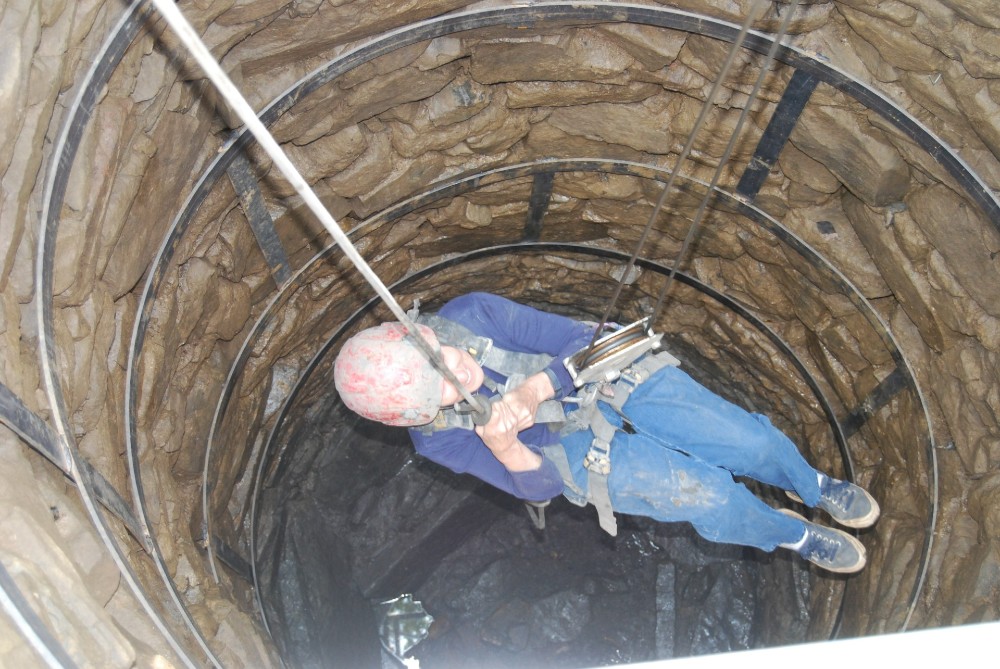
🏺 Reference image: the Etruscan well of Cetamura del Chianti
See reference image (external link)
View of the deep well where, two thousand years ago, the inhabitants of Cetamura threw grape seeds along with other household waste.
Credit: Florida State University, via York University
|
🏺 Etruscan wells: a time capsule under the Tuscan mud
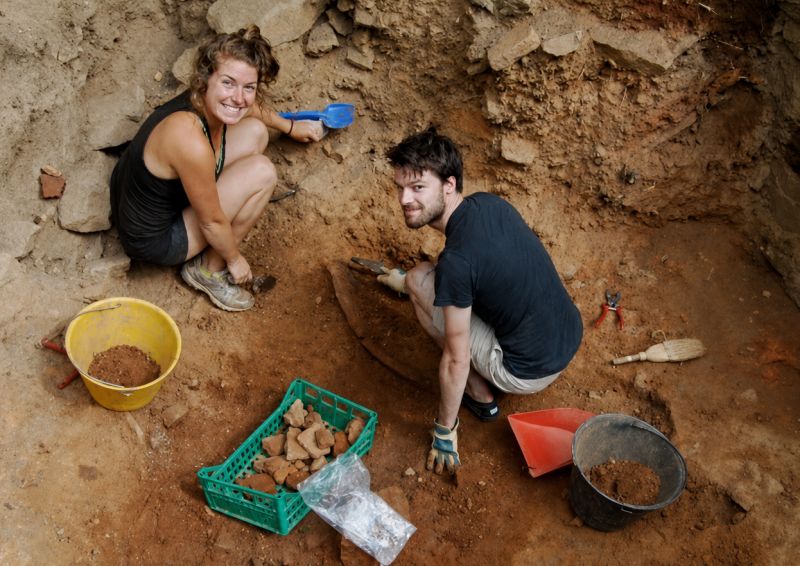
Cetamura del Chianti is a settlement located on a 695-meter hill, in the heart of Italy's most photographed wine region, about 30 kilometers northeast of Siena and 60 kilometers southeast of Florence, within the municipality of Gaiole in Chianti. The site was discovered in 1964 by Alvaro Tracchi, an amateur archaeologist in the area, but its systematic exploration only began in 1973, when Florida State University obtained excavation permission and turned the site into an archaeological field program that continues, uninterrupted, more than five decades later.
Among the most unique finds at Cetamura are two wells originally dug by the Etruscans and later reused by the Romans. For generations, locals dumped domestic and agricultural waste, including thousands of grape seeds, until the pits were finally sealed under layers of moisture-saturated, virtually oxygen-free mud. That combination proved decisive: in the absence of oxygen, the microorganisms that normally degrade organic matter cannot act with the same intensity, and plant material can survive intact for millennia.
Thanks to this exceptional preservation, the researchers were able to date and sequence seeds deposited between 300 BC and 300 AD: an arc of six centuries that covers both the late Etruscan phase and much of the Roman domination over the region.
🧬 How to read the DNA of a seed that is 2,000 years old
Working with DNA from ancient seeds is not easy. Genetic material fragments and degrades over time, so the team, led by Dr Oya Inanli, who developed this research as part of her PhD at the Department of Archaeology at the University of York, combined several techniques to extract as much information as possible from each nugget.
First, the genetic material of the 80 selected seeds was sequenced. Inanli described the result as "a remarkable story of continuity": the vast majority of the specimens analyzed corresponded to a single, identical genetic clone that was maintained from generation to generation for hundreds of years. To achieve this propagation without genetic variation, Etruscan-Roman farmers had to resort to cuttings and vegetative propagation techniques, the same principle that today allows a Malbec planted in Mendoza to be, genetically, a clone almost identical to the one grown centuries ago in Cahors, France.
The team wasn't satisfied with identifying the variety: they also used specific genetic markers to determine the color of the grape, a piece of information that normally disappears along with the flesh and skin of the fruit. And he added two complementary tools. On the one hand, near-infrared spectroscopy, a non-destructive technique that made it possible to anticipate, even before sequencing, which seeds best preserved their genetic material. On the other, a morphological analysis of the shape of the seeds, capable of distinguishing between domesticated grapes and wild grapes harvested spontaneously. Radiocarbon dating of the samples, funded by a classical studies fund at Florida State University, finalized the precise chronology of each well. The project also received European funding through the Marie Skłodowska-Curie actions of the European Union's Horizon 2020 programme.
|
❝ "We found a remarkable history of continuity."
— Dr. Oya Inanli, University of York
|
🍇 The varietal surprise: Chianti was born white
The most striking result of the study completely contradicts the image that any wine lover has of the region. Chianti has been synonymous with red for more than a century: Sangiovese dominates vineyards and labels, and since Baron Bettino Ricasoli systematized the classic Chiantigiano cut in the nineteenth century, the color red has become part of the very identity of the place.
However, the DNA of Cetamura's seeds tells a different story for the centuries before the turn of the era: the dominant variety, the one that is repeated over and over again in Etruscan and Roman samples, produced white berries. Professor Nancy De Grummond, from Florida State University and director of the excavations in Cetamura, called the find a surprise: the red wine that today gives world fame to the region was preceded, for centuries, by a white variety carefully selected and maintained by Etruscans and Romans.
The fact does not imply that there were no red grapes in ancient Tuscany, in fact some white varieties are still grown today in the area, although in minority proportions, but that the dominant and best documented variety in this specific site was white. It is, in any case, a wake-up call about how recent the varietal identity that we associate, almost as an immutable fact, with an entire wine region may be.
|
🔬 Reference image: reconstruction of the analyzed seeds
See reference image (external link)
Representation of grape seeds found in the wells of Cetamura del Chianti, whose DNA preserved for 2,000 years allowed the identification of a white variety cultivated by Etruscans and Romans.
Credit: Sergio Parra, via Muy Interesante
|
🏛 The wine network of the Roman Empire
The arrival of Rome in Cetamura was not a simple change of political flag. The genetic record shows that, after the Roman conquest of the settlement, entirely new vine varieties began to appear in the wells, suggesting that authorities or traders introduced selected vines from other regions under Roman rule.
The most striking piece of this hypothesis appears when comparing the dominant Cetamura clone with genetic material from other European sites: the researchers found a close genetic relationship with two ancient seeds previously analyzed in the south of France. For the team, this coincidence is biological evidence of a far-reaching agricultural network, organized by Rome to standardize wine production in different provinces of the Empire. It was not only a matter of marketing the wine already made: cuttings, plants and the agronomic knowledge necessary to reproduce specific varieties hundreds of kilometers from their place of origin were also circulating.
The study also found evidence of wild grape harvesting, detected through morphological analysis of the seeds, indicating that even in the midst of the expansion of organized viticulture, local communities continued to take advantage of spontaneous resources from the environment. Far from the image of isolated peasants, the winegrowers of Cetamura participated in a sophisticated agricultural economy, with commercial and even political implications.
📊 Technical file of the research
|
Fact
|
Detail
|
|
Site
|
Cetamura del Chianti, Gaiole in Chianti, Tuscany (Italy)
|
|
Material analyzed
|
80 grape seeds recovered from two Etruscan-Roman wells
|
|
Chronological period
|
Approximately 300 B.C. – 300 A.D.
|
|
Applied techniques
|
Ancient DNA Sequencing, Color Genetic Markers, Near-Infrared Spectroscopy, Seed Morphometry, Radiocarbon Dating
|
|
Publication
|
Journal of Archaeological Science (2026)
|
|
Institutions
|
York University (UK) and Florida State University (USA)
|
|
Principal investigators
|
Oya Inanli, Nathan Wales and Nancy De Grummond
|
|
Financing
|
European Union Horizon 2020 Programme (Marie Skłodowska-Curie Actions) and Florida State University Classical Studies Fund
|
🌍 The oldest vine link in the world
Among the 80 seeds analyzed, one particularly caught the team's attention: it belongs to a genetic family that is still cultivated in central and eastern Europe. Its closest modern relative is a rare variety, almost unknown outside Hungary, called Baratcsuha szürke.
But the most fascinating finding is in the following connection: this genetic lineage links directly to a legendary vine that grows today in the city of Maribor, Slovenia, on the façade of the so-called House of the Old Vine, in the Lent neighborhood, on the banks of the Drava River. Planted towards the end of the Middle Ages, estimated between 1550 and 1570, during the Ottoman invasions, this plant of the Žametovka variety is more than 400 years old and continues to produce fruit every season. Since 2004 it has been listed in the Guinness Book of Records as the oldest productive vine in the world.
For Dr Nathan Wales, also from the Department of Archaeology at the University of York, the find shows that this varietal family is both ancient and extraordinarily resilient: the grapes enjoyed by the Romans are one genetic step away from the varieties that are poured into a glass of wine today. Every time someone drinks a wine made from these heirloom varieties, the researcher argues, they are tasting a history that is just a handful of generations away from what was served on Roman tables thousands of years ago.
|
🍷 Reference image: wine and its genetic continuity
See reference image (external link)
The find connects Etruscan and Roman viticulture with genetic lineages that still survive in European vineyards, including the world's oldest vine in Maribor, Slovenia.
Credit: Vinetur
|
🍷 What does this finding say to today's viticulture?
The case of Cetamura is not an isolated event within the paleogenomics of the vine. In France, another international team managed to reconstruct more than 4,000 years of winemaking history from archaeological seeds found at different sites in the country, in a paper published in Nature Communications that documented the coexistence of wild and domesticated varieties from the Bronze Age to the Middle Ages. That same field of research had previously identified, in the latrine of a medieval French hospital, a 600-year-old seed genetically almost identical to today's Pinot Noir, as well as evidence of clonal propagation dating back to the Iron Age, between 625 and 500 BC.
The pattern that emerges from these studies is consistent: the vine varieties that we now consider traditional are neither fixed nor eternal. They are the result of thousands of human decisions (selection, propagation by cuttings, commercial exchange, climate adaptation) made over centuries by farmers who rarely left a written record of their criteria. Paleogenomics allows, for the first time, to read these decisions directly into DNA.
This perspective also challenges Argentine viticulture. Malbec, the flagship variety of Mendoza and San Juan, has its own chapter of varietal migration: it was born in the southwest of France, in the Cahors region, and arrived in Argentina only in the nineteenth century, by the hand of the French agronomist Michel Aimé Pouget. The same logic of clonal propagation that kept the white variety of Cetamura alive for two thousand years is, in essence, the one that today allows a producer from Mendoza to cultivate, generation after generation, the same genetic material that came from Europe. Understanding how varieties traveled and were preserved in Antiquity offers, in this sense, a useful mirror to think about the varietal identity of contemporary Argentine wine.
What began as household garbage thrown into a pit two thousand years ago ended up becoming one of the most complete genetic reconstructions ever achieved on the ancient vine. The discovery of Cetamura not only rewrites the varietal history of one of the most famous wine regions in the world: it also reminds us that each glass of wine contains, in addition to tannins and aromas, a silent tale of human selection that crosses empires, borders and millennia.
❓ Frequently Asked Questions
❖ Where were the 2,000-year-old grape seeds found?
In two Etruscan wells reused by the Romans at Cetamura del Chianti, an archaeological site in Tuscany, Italy, excavated by Florida State University since 1973.
❖ What did DNA reveal about the color of ancient grapes?
Genetic markers showed that the dominant variety in the wells, maintained for centuries by the Etruscans and Romans, produced white berries, a surprising fact for a region today almost exclusively associated with the red Sangiovese.
❖ How is this find connected to the oldest vine in the world?
One of the seeds analyzed belongs to a genetic family related to the 400-year-old vine that grows in Maribor, Slovenia, recognized by the Guinness Book of Records as the oldest productive plant on the planet.
❖ What does this study prove about the Roman wine trade?
The genetic similarity between the dominant clone of Cetamura and seeds found in southern France suggests that the Roman Empire organized an agricultural network that distributed cuttings and selected varieties among different provinces to standardize wine production.
❖ Who published the research and where?
The study was led by Oya Inanli and Nathan Wales of York University, along with Nancy De Grummond of Florida State University, and was published in 2026 in the Journal of Archaeological Science.
1. University of York — Ancient DNA from Tuscan wells reveal origins of modern wine
2. EurekAlert! — Ancient DNA from Tuscan wells reveal origins of modern wine
3. ScienceDirect — Grapevine cultivation at Cetamura del Chianti (Journal of Archaeological Science)
4. Vinetur — Chianti was born white 2,000 years ago, ancient DNA reveals
5. Very Interesting — DNA from 80 Seeds Found in Tuscan Wells Reveals the Origins of Modern Wine
6. The Green Compass — 2,000-Year-Old Grape Seeds in an Etruscan Well Reveal Surprises About Modern Wine
7. Mundo Agropecuario — DNA from ancient seeds reveals the origin of modern wine
8. Cetamura del Chianti Excavations and Research — Florida State University
9. 24Horas.cl — Study carried out with ancient DNA from grape seeds allows us to reconstruct 4,000 years of viticulture
⚙ SEO Data Sheet
Internal optimization document for blog posting. Not included in the public body of the article.
Title tag (≤60 characters): 2,000-year-old DNA reveals the origin of modern wine
Meta description (≤155 characters): A DNA study on 2,000-year-old grape seeds in Cetamura del Chianti reveals that Tuscan red wine was born white. I discovered the story.
Suggested slug URL: /dna-grape-seeds-2000-years-wine-origin
Main keyword: 2000 year old grape seed DNA
Secondary keywords: origin of wine, Cetamura of Chianti, oldest vine in the world, history of Chianti, paleogenomics of the vine, ancient Roman wine
Search intent: Informational (scientific and historical curiosity, high probability of featured snippet)
✓H1: DNA from 2,000-year-old grape seeds reconstructs the origin of modern wine
✓H2: Etruscan wells: a time capsule under the Tuscan mud
✓H2: How to read the DNA of a seed that is 2,000 years old
✓H2: The varietal surprise: Chianti was born white
✓H2: The wine network of the Roman Empire
✓H2: The link with the oldest vine in the world
✓H2: What does this finding say about today's viticulture?
✓H2: Frequently asked questions (with H3 for each question in the web version, to enrich the FAQPage markup)
✓The FAQ block is written in a 30-50 word direct question + self-contained response format, ideal for the Google Spotlight and for Voice Assistants.
✓The intro answers the 5Ws (who, what, when, where, why) in the first two sentences, key to the paragraph snippet.
✓The technical sheet in table favors extraction as a featured table or knowledge panel.
Insert the following blocks of structured data into the <head> or via the CMS SEO plugin:
|
{
"@context": "https://schema.org",
"@type": "NewsArticle",
"headline": "DNA from 2,000-year-old grape seeds reconstructs
the origin of modern wine",
"datePublished": "2026-06-16",
"dateModified": "2026-06-16",
"author": { "@type": "Organization", "name": "[Nombre del medio]" },
"publisher": { "@type": "Organization", "name": "[Nombre del medio]" },
"about": ["paleogenomics", "history of wine", "Roman archaeology"],
"mainEntityOfPage": "[End URL of article]"
}
|
|
{
"@context": "https://schema.org",
"@type": "FAQPage",
"mainEntity": [
{
"@type": "Question",
"name": "Where were the 2,000-year-old grape seeds found?"
"acceptedAnswer": {
"@type": "Answer",
"text": "In two Etruscan wells reused by the Romans
in Cetamura del Chianti, Tuscany, Italy."
}
}
// ... repeat the block for each FAQ question
]
}
|
✓Attribute each finding to its authors and institutions (York University, Florida State University) and link to the peer-reviewed primary source (Journal of Archaeological Science).
✓Include a "Sources consulted" box visible to the reader, not only in footnotes, reinforcing editorial transparency.
✓Add a brief bio of the author of the article with credentials in science or wine journalism, and link to their author profile.
✓Keep publication and last updated date visible in the article.
✓Avoid absolute statements not supported by the study; using conditionals and direct attribution ("according to the researchers", "the study suggests").
✓LCP (Largest Contentful Paint): Compress the main image to WebP/AVIF and serve it with explicit dimensions (width/height) to avoid rendering blocks.
✓CLS (Cumulative Layout Shift): Reserve the space of each image with width and height attributes or aspect-ratio in CSS before you upload the file.
✓INP (Interaction to Next Paint): lazy-load images below the waterline and minimize third-party scripts (banners, comments) above the main content.
✓Use a CDN or full-page cache, given the seasonal traffic profile that popular science notes usually have.
✓Descriptive alt attribute in each image (e.g., "Etruscan well from Cetamura del Chianti where grape seeds were found").
✓Minimum contrast of 4.5:1 between text and background in all color blocks (especially check the quotation boxes and image boxes).
✓Header hierarchy without breaks (single H1, H2 and H3 nested correctly, without omitting levels).
✓Links with descriptive text ("See reference image") instead of "click here", for screen readers.
✓Base font size of no less than 16px and line spacing of at least 1.5 in the body of the text.
✓Tables with correctly labeled row/column headers (<th scope="col">) in the HTML version.
✓Suggested internal link to previous notes on Argentina and Malbec, grape harvest or history of Mendoza wine, to reinforce the thematic cluster of the site.
✓External links to primary sources (University of York, ScienceDirect) with rel="nofollow noopener" attribute if required by the site's editorial policy.
✓Consider an exit link to the official site of Cetamura del Chianti to enrich the tourist-cultural context.
og:title: 2,000-Year-Old Grape Seed DNA Reconstructs the Origin of Modern Wine
og:description: A study in Cetamura del Chianti reveals that Tuscan red wine was born white. The science behind the find.
and:type: article
twitter:card: summary_large_image
Length of the body of the article: Approximately 2,080 words
Estimated reading time: 10 minutes (at 200 words per minute)
Recommended primary keyword density: 0.8% – 1.2% (between 16 and 25 approximate mentions, including semantic variants)
2,000-Year-Old Grape Seed DNA Reconstructs the Origin of Modern Wine
An unprecedented genetic study in the Etruscan and Roman wells of Cetamura del Chianti reveals that the cradle of Tuscan red wine was, for centuries, a white vineyard, and traces a genetic thread that reaches the oldest vine in the world, still alive in Slovenia.
⏱ Reading Time: 10 minutes 📖 Category: Wine 📅 Science & Culture Updated: June 16, 2026
Eighty grape seeds, recovered from the bottom of two deep wells in Tuscany and preserved for two millennia thanks to a practically oxygen-free mud, have just rewritten an entire chapter in the history of wine. A team led by the University of York, in collaboration with Florida State University, sequenced the DNA of these small plant fossils and discovered that the region now synonymous with the red Sangiovese was, between the third century BC and the third century AD, the almost exclusive domain of a white variety. The finding, published in the Journal of Archaeological Science, does not stop there: it also connects this ancestral lineage with a vine that, sixteen centuries later, continues to bear fruit on the façade of a house in Slovenia.
|
🏺 Reference image: the Etruscan well of Cetamura del Chianti
See reference image (external link)
View of the deep well where, two thousand years ago, the inhabitants of Cetamura threw grape seeds along with other household waste.
Credit: Florida State University, via York University
|
🏺 Etruscan wells: a time capsule under the Tuscan mud
Cetamura del Chianti is a settlement located on a 695-meter hill, in the heart of Italy's most photographed wine region, about 30 kilometers northeast of Siena and 60 kilometers southeast of Florence, within the municipality of Gaiole in Chianti. The site was discovered in 1964 by Alvaro Tracchi, an amateur archaeologist in the area, but its systematic exploration only began in 1973, when Florida State University obtained excavation permission and turned the site into an archaeological field program that continues, uninterrupted, more than five decades later.
Among the most unique finds at Cetamura are two wells originally dug by the Etruscans and later reused by the Romans. For generations, locals dumped domestic and agricultural waste, including thousands of grape seeds, until the pits were finally sealed under layers of moisture-saturated, virtually oxygen-free mud. That combination proved decisive: in the absence of oxygen, the microorganisms that normally degrade organic matter cannot act with the same intensity, and plant material can survive intact for millennia.
Thanks to this exceptional preservation, the researchers were able to date and sequence seeds deposited between 300 BC and 300 AD: an arc of six centuries that covers both the late Etruscan phase and much of the Roman domination over the region.
🧬 How to read the DNA of a seed that is 2,000 years old
Working with DNA from ancient seeds is not easy. Genetic material fragments and degrades over time, so the team, led by Dr Oya Inanli, who developed this research as part of her PhD at the Department of Archaeology at the University of York, combined several techniques to extract as much information as possible from each nugget.
First, the genetic material of the 80 selected seeds was sequenced. Inanli described the result as "a remarkable story of continuity": the vast majority of the specimens analyzed corresponded to a single, identical genetic clone that was maintained from generation to generation for hundreds of years. To achieve this propagation without genetic variation, Etruscan-Roman farmers had to resort to cuttings and vegetative propagation techniques, the same principle that today allows a Malbec planted in Mendoza to be, genetically, a clone almost identical to the one grown centuries ago in Cahors, France.
The team wasn't satisfied with identifying the variety: they also used specific genetic markers to determine the color of the grape, a piece of information that normally disappears along with the flesh and skin of the fruit. And he added two complementary tools. On the one hand, near-infrared spectroscopy, a non-destructive technique that made it possible to anticipate, even before sequencing, which seeds best preserved their genetic material. On the other, a morphological analysis of the shape of the seeds, capable of distinguishing between domesticated grapes and wild grapes harvested spontaneously. Radiocarbon dating of the samples, funded by a classical studies fund at Florida State University, finalized the precise chronology of each well. The project also received European funding through the Marie Skłodowska-Curie actions of the European Union's Horizon 2020 programme.
|
❝ "We found a remarkable history of continuity."
— Dr. Oya Inanli, University of York
|
🍇 The varietal surprise: Chianti was born white
The most striking result of the study completely contradicts the image that any wine lover has of the region. Chianti has been synonymous with red for more than a century: Sangiovese dominates vineyards and labels, and since Baron Bettino Ricasoli systematized the classic Chiantigiano cut in the nineteenth century, the color red has become part of the very identity of the place.
However, the DNA of Cetamura's seeds tells a different story for the centuries before the turn of the era: the dominant variety, the one that is repeated over and over again in Etruscan and Roman samples, produced white berries. Professor Nancy De Grummond, from Florida State University and director of the excavations in Cetamura, called the find a surprise: the red wine that today gives world fame to the region was preceded, for centuries, by a white variety carefully selected and maintained by Etruscans and Romans.
The fact does not imply that there were no red grapes in ancient Tuscany, in fact some white varieties are still grown today in the area, although in minority proportions, but that the dominant and best documented variety in this specific site was white. It is, in any case, a wake-up call about how recent the varietal identity that we associate, almost as an immutable fact, with an entire wine region may be.
|
🔬 Reference image: reconstruction of the analyzed seeds
See reference image (external link)
Representation of grape seeds found in the wells of Cetamura del Chianti, whose DNA preserved for 2,000 years allowed the identification of a white variety cultivated by Etruscans and Romans.
Credit: Sergio Parra, via Muy Interesante
|
🏛 The wine network of the Roman Empire
The arrival of Rome in Cetamura was not a simple change of political flag. The genetic record shows that, after the Roman conquest of the settlement, entirely new vine varieties began to appear in the wells, suggesting that authorities or traders introduced selected vines from other regions under Roman rule.
The most striking piece of this hypothesis appears when comparing the dominant Cetamura clone with genetic material from other European sites: the researchers found a close genetic relationship with two ancient seeds previously analyzed in the south of France. For the team, this coincidence is biological evidence of a far-reaching agricultural network, organized by Rome to standardize wine production in different provinces of the Empire. It was not only a matter of marketing the wine already made: cuttings, plants and the agronomic knowledge necessary to reproduce specific varieties hundreds of kilometers from their place of origin were also circulating.
The study also found evidence of wild grape harvesting, detected through morphological analysis of the seeds, indicating that even in the midst of the expansion of organized viticulture, local communities continued to take advantage of spontaneous resources from the environment. Far from the image of isolated peasants, the winegrowers of Cetamura participated in a sophisticated agricultural economy, with commercial and even political implications.
📊 Technical file of the research
|
Fact
|
Detail
|
|
Site
|
Cetamura del Chianti, Gaiole in Chianti, Tuscany (Italy)
|
|
Material analyzed
|
80 grape seeds recovered from two Etruscan-Roman wells
|
|
Chronological period
|
Approximately 300 B.C. – 300 A.D.
|
|
Applied techniques
|
Ancient DNA Sequencing, Color Genetic Markers, Near-Infrared Spectroscopy, Seed Morphometry, Radiocarbon Dating
|
|
Publication
|
Journal of Archaeological Science (2026)
|
|
Institutions
|
York University (UK) and Florida State University (USA)
|
|
Principal investigators
|
Oya Inanli, Nathan Wales and Nancy De Grummond
|
|
Financing
|
European Union Horizon 2020 Programme (Marie Skłodowska-Curie Actions) and Florida State University Classical Studies Fund
|
🌍 The oldest vine link in the world
Among the 80 seeds analyzed, one particularly caught the team's attention: it belongs to a genetic family that is still cultivated in central and eastern Europe. Its closest modern relative is a rare variety, almost unknown outside Hungary, called Baratcsuha szürke.
But the most fascinating finding is in the following connection: this genetic lineage links directly to a legendary vine that grows today in the city of Maribor, Slovenia, on the façade of the so-called House of the Old Vine, in the Lent neighborhood, on the banks of the Drava River. Planted towards the end of the Middle Ages, estimated between 1550 and 1570, during the Ottoman invasions, this plant of the Žametovka variety is more than 400 years old and continues to produce fruit every season. Since 2004 it has been listed in the Guinness Book of Records as the oldest productive vine in the world.
For Dr Nathan Wales, also from the Department of Archaeology at the University of York, the find shows that this varietal family is both ancient and extraordinarily resilient: the grapes enjoyed by the Romans are one genetic step away from the varieties that are poured into a glass of wine today. Every time someone drinks a wine made from these heirloom varieties, the researcher argues, they are tasting a history that is just a handful of generations away from what was served on Roman tables thousands of years ago.
|
🍷 Reference image: wine and its genetic continuity
See reference image (external link)
The find connects Etruscan and Roman viticulture with genetic lineages that still survive in European vineyards, including the world's oldest vine in Maribor, Slovenia.
Credit: Vinetur
|
🍷 What does this finding say to today's viticulture?
The case of Cetamura is not an isolated event within the paleogenomics of the vine. In France, another international team managed to reconstruct more than 4,000 years of winemaking history from archaeological seeds found at different sites in the country, in a paper published in Nature Communications that documented the coexistence of wild and domesticated varieties from the Bronze Age to the Middle Ages. That same field of research had previously identified, in the latrine of a medieval French hospital, a 600-year-old seed genetically almost identical to today's Pinot Noir, as well as evidence of clonal propagation dating back to the Iron Age, between 625 and 500 BC.
The pattern that emerges from these studies is consistent: the vine varieties that we now consider traditional are neither fixed nor eternal. They are the result of thousands of human decisions (selection, propagation by cuttings, commercial exchange, climate adaptation) made over centuries by farmers who rarely left a written record of their criteria. Paleogenomics allows, for the first time, to read these decisions directly into DNA.
This perspective also challenges Argentine viticulture. Malbec, the flagship variety of Mendoza and San Juan, has its own chapter of varietal migration: it was born in the southwest of France, in the Cahors region, and arrived in Argentina only in the nineteenth century, by the hand of the French agronomist Michel Aimé Pouget. The same logic of clonal propagation that kept the white variety of Cetamura alive for two thousand years is, in essence, the one that today allows a producer from Mendoza to cultivate, generation after generation, the same genetic material that came from Europe. Understanding how varieties traveled and were preserved in Antiquity offers, in this sense, a useful mirror to think about the varietal identity of contemporary Argentine wine.
What began as household garbage thrown into a pit two thousand years ago ended up becoming one of the most complete genetic reconstructions ever achieved on the ancient vine. The discovery of Cetamura not only rewrites the varietal history of one of the most famous wine regions in the world: it also reminds us that each glass of wine contains, in addition to tannins and aromas, a silent tale of human selection that crosses empires, borders and millennia.
❓ Frequently Asked Questions
❖ Where were the 2,000-year-old grape seeds found?
In two Etruscan wells reused by the Romans at Cetamura del Chianti, an archaeological site in Tuscany, Italy, excavated by Florida State University since 1973.
❖ What did DNA reveal about the color of ancient grapes?
Genetic markers showed that the dominant variety in the wells, maintained for centuries by the Etruscans and Romans, produced white berries, a surprising fact for a region today almost exclusively associated with the red Sangiovese.
❖ How is this find connected to the oldest vine in the world?
One of the seeds analyzed belongs to a genetic family related to the 400-year-old vine that grows in Maribor, Slovenia, recognized by the Guinness Book of Records as the oldest productive plant on the planet.
❖ What does this study prove about the Roman wine trade?
The genetic similarity between the dominant clone of Cetamura and seeds found in southern France suggests that the Roman Empire organized an agricultural network that distributed cuttings and selected varieties among different provinces to standardize wine production.
❖ Who published the research and where?
The study was led by Oya Inanli and Nathan Wales of York University, along with Nancy De Grummond of Florida State University, and was published in 2026 in the Journal of Archaeological Science.
1. University of York — Ancient DNA from Tuscan wells reveal origins of modern wine
2. EurekAlert! — Ancient DNA from Tuscan wells reveal origins of modern wine
3. ScienceDirect — Grapevine cultivation at Cetamura del Chianti (Journal of Archaeological Science)
4. Vinetur — Chianti was born white 2,000 years ago, ancient DNA reveals
5. Very Interesting — DNA from 80 Seeds Found in Tuscan Wells Reveals the Origins of Modern Wine
6. The Green Compass — 2,000-Year-Old Grape Seeds in an Etruscan Well Reveal Surprises About Modern Wine
7. Mundo Agropecuario — DNA from ancient seeds reveals the origin of modern wine
8. Cetamura del Chianti Excavations and Research — Florida State University
9. 24Horas.cl — Study carried out with ancient DNA from grape seeds allows us to reconstruct 4,000 years of viticulture
⚙ SEO Data Sheet
Internal optimization document for blog posting. Not included in the public body of the article.
Title tag (≤60 characters): 2,000-year-old DNA reveals the origin of modern wine
Meta description (≤155 characters): A DNA study on 2,000-year-old grape seeds in Cetamura del Chianti reveals that Tuscan red wine was born white. I discovered the story.
Suggested slug URL: /dna-grape-seeds-2000-years-wine-origin
Main keyword: 2000 year old grape seed DNA
Secondary keywords: origin of wine, Cetamura of Chianti, oldest vine in the world, history of Chianti, paleogenomics of the vine, ancient Roman wine
Search intent: Informational (scientific and historical curiosity, high probability of featured snippet)
✓H1: DNA from 2,000-year-old grape seeds reconstructs the origin of modern wine
✓H2: Etruscan wells: a time capsule under the Tuscan mud
✓H2: How to read the DNA of a seed that is 2,000 years old
✓H2: The varietal surprise: Chianti was born white
✓H2: The wine network of the Roman Empire
✓H2: The link with the oldest vine in the world
✓H2: What does this finding say about today's viticulture?
✓H2: Frequently asked questions (with H3 for each question in the web version, to enrich the FAQPage markup)
✓The FAQ block is written in a 30-50 word direct question + self-contained response format, ideal for the Google Spotlight and for Voice Assistants.
✓The intro answers the 5Ws (who, what, when, where, why) in the first two sentences, key to the paragraph snippet.
✓The technical sheet in table favors extraction as a featured table or knowledge panel.
Insert the following blocks of structured data into the <head> or via the CMS SEO plugin:
|
{
"@context": "https://schema.org",
"@type": "NewsArticle",
"headline": "DNA from 2,000-year-old grape seeds reconstructs
the origin of modern wine",
"datePublished": "2026-06-16",
"dateModified": "2026-06-16",
"author": { "@type": "Organization", "name": "[Nombre del medio]" },
"publisher": { "@type": "Organization", "name": "[Nombre del medio]" },
"about": ["paleogenomics", "history of wine", "Roman archaeology"],
"mainEntityOfPage": "[End URL of article]"
}
|
|
{
"@context": "https://schema.org",
"@type": "FAQPage",
"mainEntity": [
{
"@type": "Question",
"name": "Where were the 2,000-year-old grape seeds found?"
"acceptedAnswer": {
"@type": "Answer",
"text": "In two Etruscan wells reused by the Romans
in Cetamura del Chianti, Tuscany, Italy."
}
}
// ... repeat the block for each FAQ question
]
}
|
✓Attribute each finding to its authors and institutions (York University, Florida State University) and link to the peer-reviewed primary source (Journal of Archaeological Science).
✓Include a "Sources consulted" box visible to the reader, not only in footnotes, reinforcing editorial transparency.
✓Add a brief bio of the author of the article with credentials in science or wine journalism, and link to their author profile.
✓Keep publication and last updated date visible in the article.
✓Avoid absolute statements not supported by the study; using conditionals and direct attribution ("according to the researchers", "the study suggests").
✓LCP (Largest Contentful Paint): Compress the main image to WebP/AVIF and serve it with explicit dimensions (width/height) to avoid rendering blocks.
✓CLS (Cumulative Layout Shift): Reserve the space of each image with width and height attributes or aspect-ratio in CSS before you upload the file.
✓INP (Interaction to Next Paint): lazy-load images below the waterline and minimize third-party scripts (banners, comments) above the main content.
✓Use a CDN or full-page cache, given the seasonal traffic profile that popular science notes usually have.
✓Descriptive alt attribute in each image (e.g., "Etruscan well from Cetamura del Chianti where grape seeds were found").
✓Minimum contrast of 4.5:1 between text and background in all color blocks (especially check the quotation boxes and image boxes).
✓Header hierarchy without breaks (single H1, H2 and H3 nested correctly, without omitting levels).
✓Links with descriptive text ("See reference image") instead of "click here", for screen readers.
✓Base font size of no less than 16px and line spacing of at least 1.5 in the body of the text.
✓Tables with correctly labeled row/column headers (<th scope="col">) in the HTML version.
✓Suggested internal link to previous notes on Argentina and Malbec, grape harvest or history of Mendoza wine, to reinforce the thematic cluster of the site.
✓External links to primary sources (University of York, ScienceDirect) with rel="nofollow noopener" attribute if required by the site's editorial policy.
✓Consider an exit link to the official site of Cetamura del Chianti to enrich the tourist-cultural context.
og:title: 2,000-Year-Old Grape Seed DNA Reconstructs the Origin of Modern Wine
og:description: A study in Cetamura del Chianti reveals that Tuscan red wine was born white. The science behind the find.
and:type: article
twitter:card: summary_large_image
Length of the body of the article: Approximately 2,080 words
Estimated reading time: 10 minutes (at 200 words per minute)
Recommended primary keyword density: 0.8% – 1.2% (between 16 and 25 approximate mentions, including semantic variants)
Close












 2,000-Year-Old Grape Seed DNA Reconstructs the Origin of Modern Wine - by